
Building a great business is a climate strategy
The ignored half of the equation
Homes generate more emissions than cars. That's the fact that sent Paul Lambert, CEO and co-founder of Quilt, looking for a problem worth solving. Everyone in climate circles knows it intellectually, but the decade of attention and capital that followed went almost entirely toward EVs, leaving the home heating and cooling side largely untouched. Policy support existed. Heat pump awareness had reached 90% of Americans. The compressor technology had been reliable for decades. What the category lacked was a product anyone actually wanted.
Nobody was waking up wanting a heat pump. The gap Quilt was built to close was desire, and desire is a design problem.
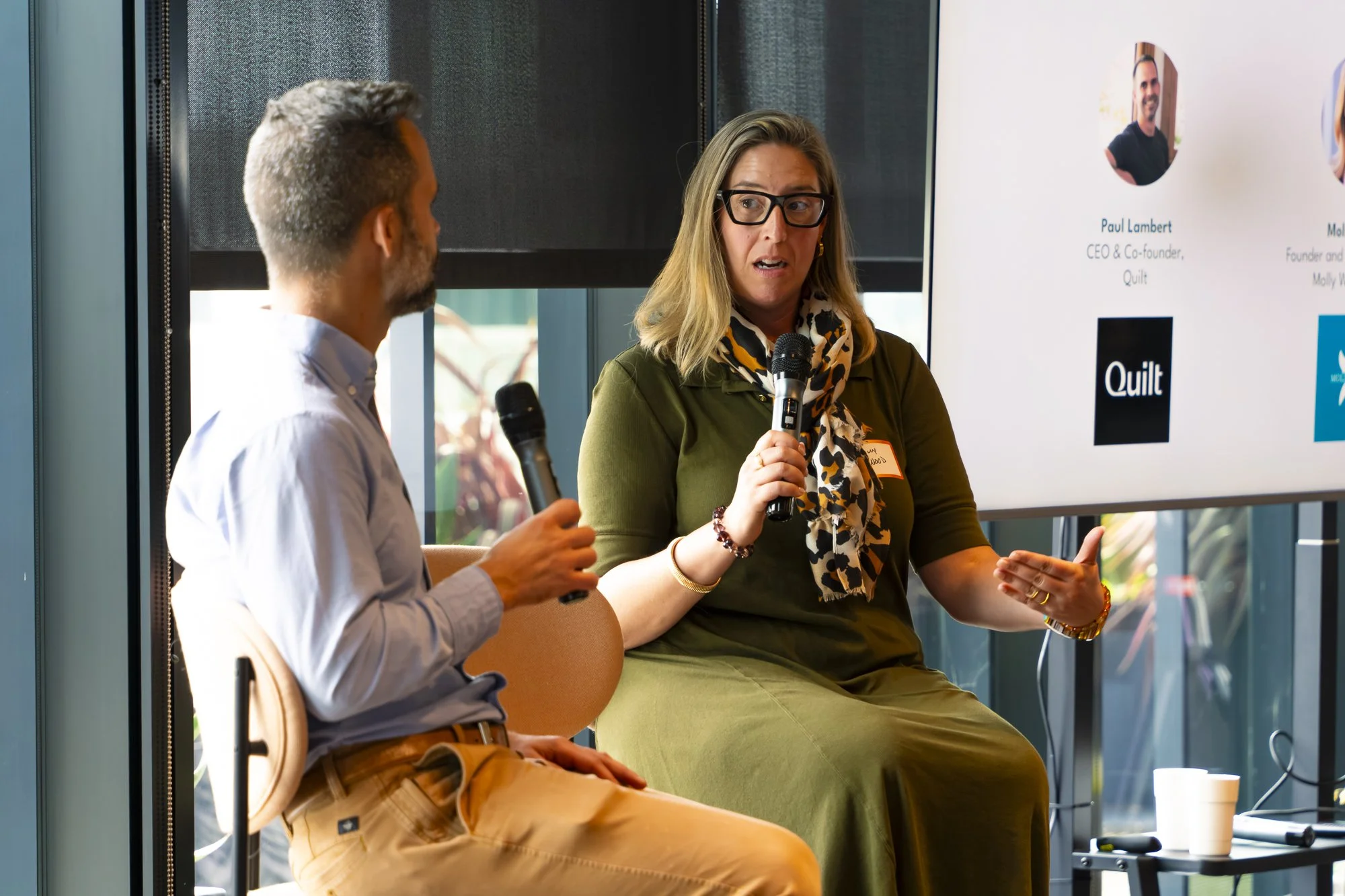
Molly Wood, technology journalist and host of the climate podcast Everybody in the Pool, pressed Paul on when exactly the "don't lead with climate" thinking took hold. His answer: it wasn't recent. Working outside California, with traditional industries and family-owned HVAC businesses in parts of the country that don't share Bay Area assumptions, simply underlined what was already true. A product that only appeals to people who already care about climate is not a mass market product.
Design as the unlock
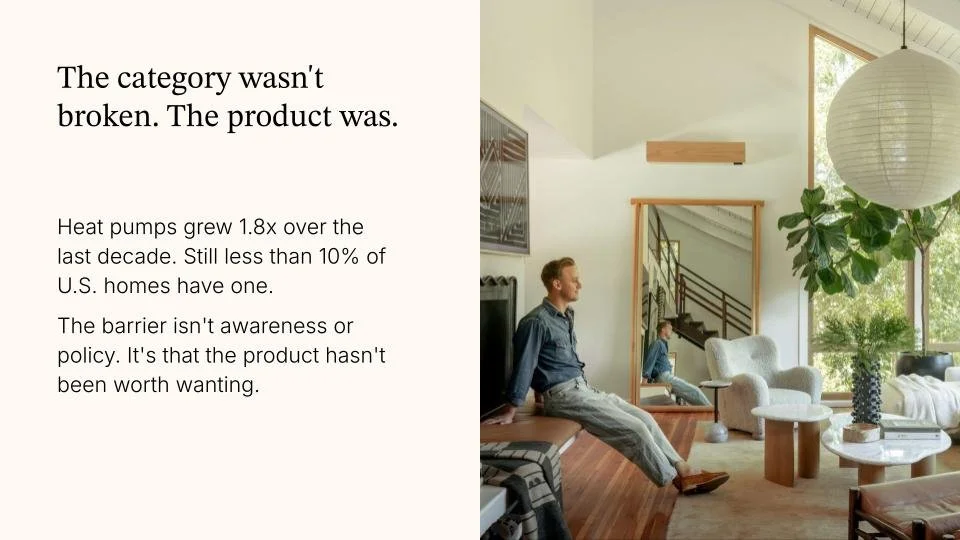
The ductless heat pump, the box on a hotel wall with the remote control, is the most common HVAC system in the world outside North America. In the US, it remained a largely commercial product, associated with cheap plastic casings, loud operation, and the aesthetic of a budget motel. When Quilt interviewed homeowners who had considered and rejected ductless systems, aesthetics came up at the very top of the list. People wanted the energy savings. The object itself was the barrier.
Credit: Quilt
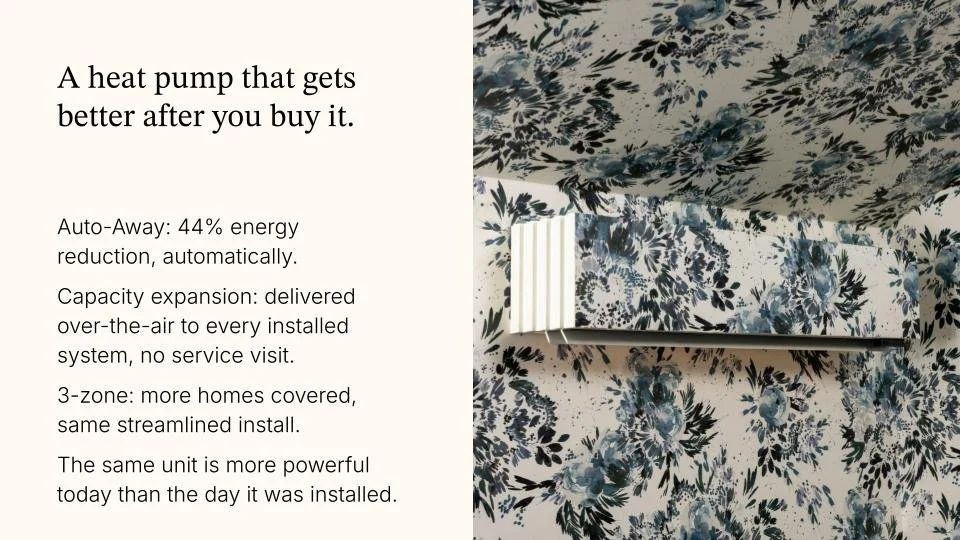
Quilt's indoor units have removable front panels that can be wallpapered or painted to match the room. The outdoor unit is black. These feel like small details, but Paul's framing is deliberate: the product has to earn the right to be on someone's wall, in their most valuable and most private space. A home isn't just a building. It's a space people have invested thought and identity into, and an appliance that ignores that doesn't get installed.
The founding team came from Google, Nest, and Apple. Paul is direct about which camp Quilt falls into. The compressor is standard hardware, shared across the industry. Quilt didn't reinvent it and didn't need to. The innovation lives almost entirely in software, data, and algorithms, in an industry that technology had largely bypassed.
What 10x sensors actually enables
Quilt's systems have ten times more sensors than comparable products, on both indoor and outdoor units. The reason that matters isn't the sensors themselves. It's the combinatorial surface area they create. With granular data from every room and precise control over temperature gradients, the software can do things a single thermostat controlling ductwork cannot.
The flagship feature, Auto-Away, automatically ramps down energy usage in empty rooms, saving 44% energy across a meaningful share of the installed base. The engineering underneath is more interesting than the name suggests. Ramping down an empty room only saves energy if you're smart about bringing it back. If someone returns and cranks the temperature, the efficiency gains disappear.
Paul described the algorithms Quilt built to model reoccupancy probability, how likely is it that this room gets used in the next hour, and at what rate should it return to temperature, to preserve the savings without sacrificing comfort.

Paul Lambert
The other breakthrough, which Paul flagged as a first in HVAC industry history, was the over-the-air update. Every other product in the category peaks on installation day and depreciates from there. Quilt ships new software every two weeks. The most striking example: customers who purchased 9,000 BTU systems woke up one morning with 12,000 BTU systems, because an update widened the operating range of the existing hardware. The product got meaningfully more capable without anyone touching the unit.
Credit: Quilt
Quilt started as a direct-to-consumer company, with the logic that owning the homeowner relationship directly would produce the best brand experience. The reality, as Paul described it, was that getting into homes at any meaningful scale required navigating an industry built entirely around HVAC contractors, the people homeowners actually call when something needs installing or replacing.
The pivot to a B2B2C model, selling to contractors who then sell to homeowners, happened about a year and a half ago. Paul corrected his own slide from the stage: it said 100 contractor partners, but they'd passed 120, with that number shifting in the two weeks since the slide was made. They're adding a partner every couple of days, operating across 36 states in the US and Canada.
The contractor pitch, Paul explained, is framed entirely around business metrics. Most HVAC products look identical, which means a contractor walking into someone's home knows the next person through the door offers something indistinguishable. Quilt gives them differentiation, along with high-quality leads, remote diagnostics, and a lower callback rate because issues can often be identified before they require a truck roll. The environmental story plays no role in these conversations, but revenue and operational efficiency do.
Molly Wood
Not talking about climate
Heat pumps have now outsold furnaces for three consecutive years. Contractors who were steering customers away two years ago are actively building heat pump businesses now, because the market has moved and they want to be in it.
The consumer entry points Paul focuses on are practical: energy bills too high, adding cooling to a home built without it, or a broken furnace that needs replacing on a cold day. For homes with electric resistive heating, baseboard heaters or electric furnaces, Quilt can sometimes cut the energy bill by a factor of four or five. Nobody needs to care about carbon to find that compelling.
Nest made people care about their thermostat for the first time, turning a utility object into something with a personality and a reason to show guests. Quilt's bet is that the same move works one level up, past the control interface and into the whole system. What Nest proved is that once something feels inevitable, the category tips