If you keep seeing Greco-Roman statues and Renaissance paintings on AI company websites, you are not hallucinating. Some of the most design-led AI companies are placing their products inside a long lineage of human craft, and there’s a clear psychology behind it.
Credit: Midjourney/Every illustration.
Goodbye, robot hand
For years, AI looked like a machine, and stock libraries filled up with chrome robot hands and glowing blue brains. Today, marble heads and oil paintings are showing up on the home pages of AI-native brands, and the figures in them are thinkers, writers, lawgivers, and artists. Why the change?
Classical sculpture and painting are shorthand for mastery. They recall people who refined law, philosophy, and art over lifetimes.
When an AI company sets its product beside a marble head, the buyer reads the product as part of that tradition of judgment and care. That is the halo effect at work: one strong impression shapes how people judge everything around it.
The statue also carries authority bias, the extra weight people give to recognized expertise, and familiarity bias, the comfort of a face already seen in museums and textbooks. Together, they make a brand-new product feel established on first contact.
Five companies leaning on classical authority
Credit: Ivo
Ivo, a legal AI provider, has one of the most distinct identities in its category. Its creative agency, Motto, built the brand around the idea of "Intelligence by Design" and chose to "bring art and beauty into the system." Ivo's brand pillars describe its customers as well-educated and analytical, and for lawyers, whose discipline descends from Roman law, a classical head is an in-group reference that honors that education.
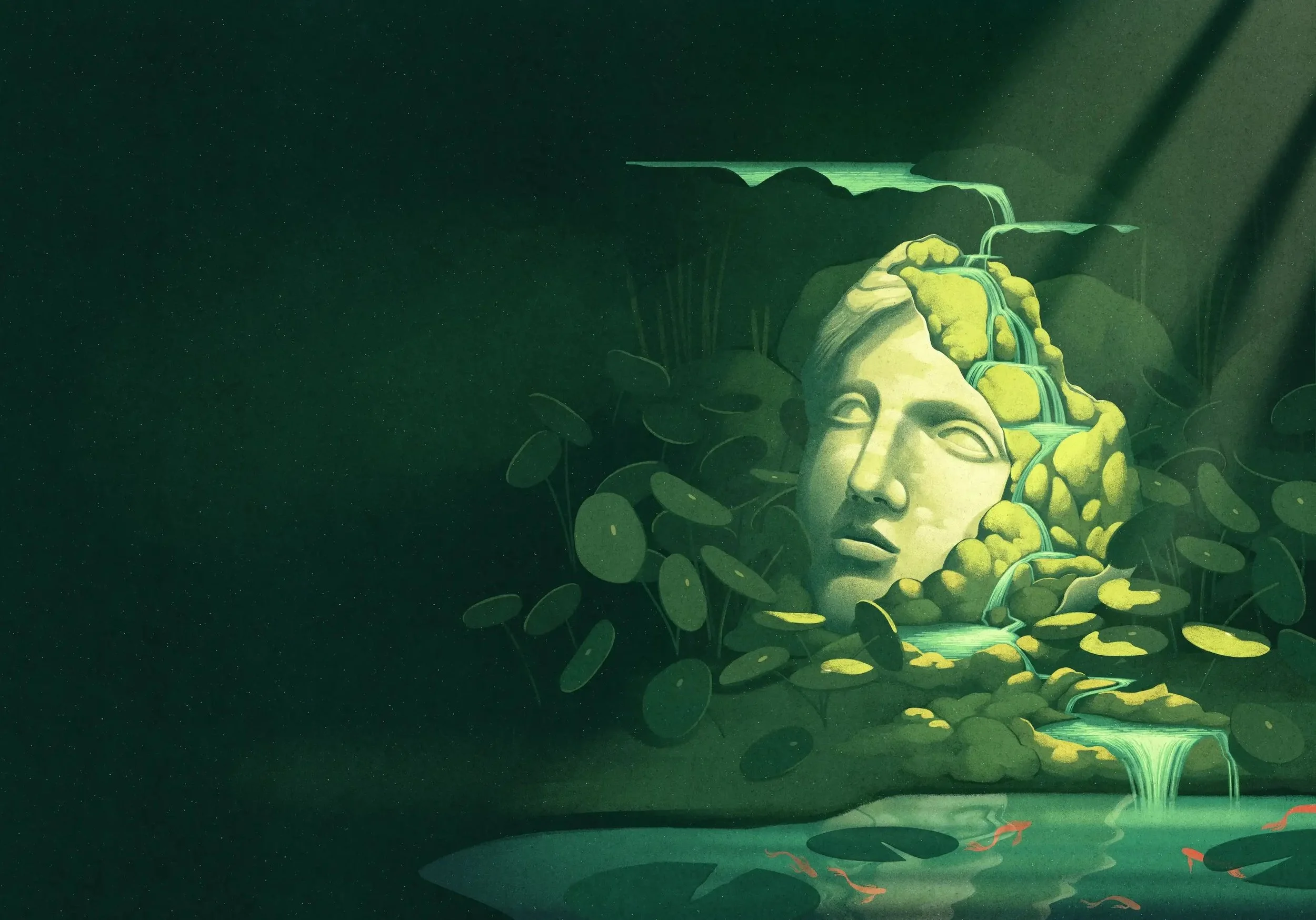
In a precise, high-stakes profession, Ivo's imagery offers composure: a marble face in moss, falling light, running water, and koi at rest. For buyers whose job is to catch every risk in a contract, that calm signals an AI that will treat their work with care.
Credit: Chamelio
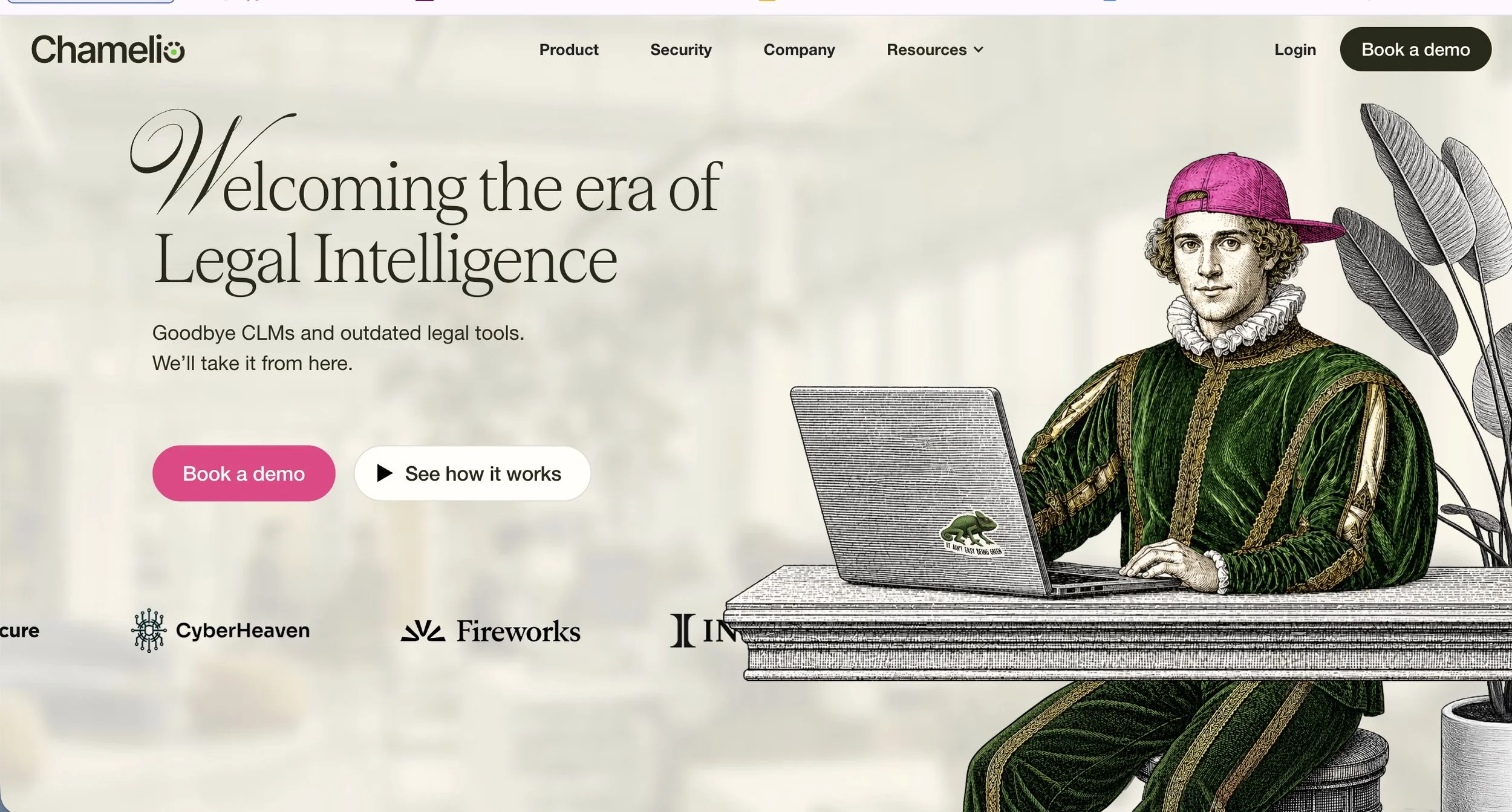
Chamelio, which builds AI for in-house legal teams, makes the same move through the concept lawyers know best: precedent. Its in-house rebrand, led by Head of Marketing Yishai Dvash, fits in two lines that one of its designers shared on LinkedIn: "Rooted in what made legal great. Built for what comes next."
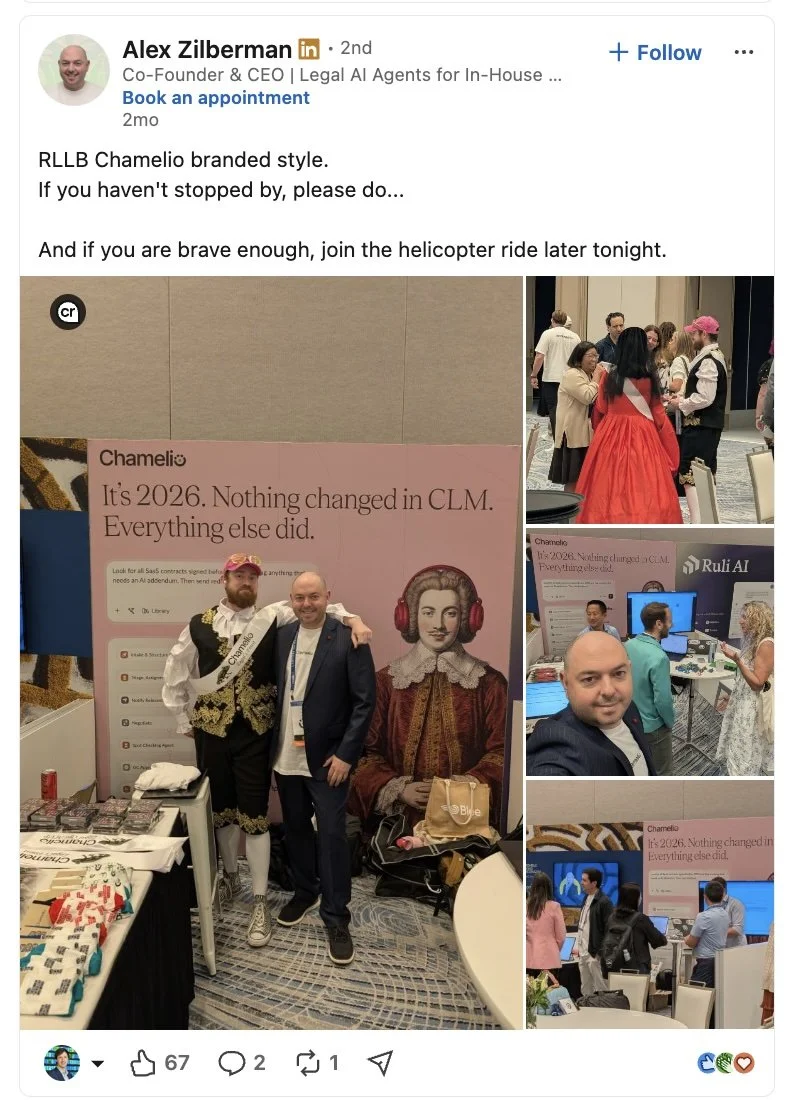
Credit: Chamelio
The team also carries the brand experience into its live events.
Outside legal, the same reference does a different job: it sparks curiosity.
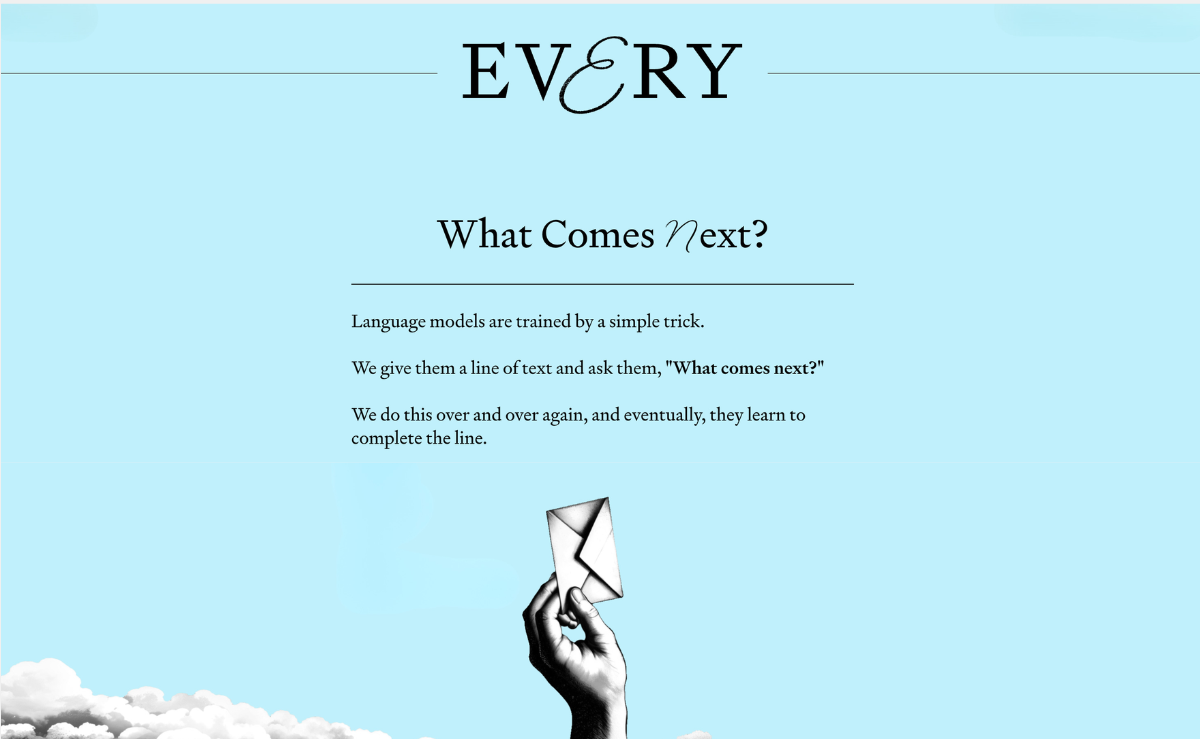
Credit: Midjourney/Every illustration.
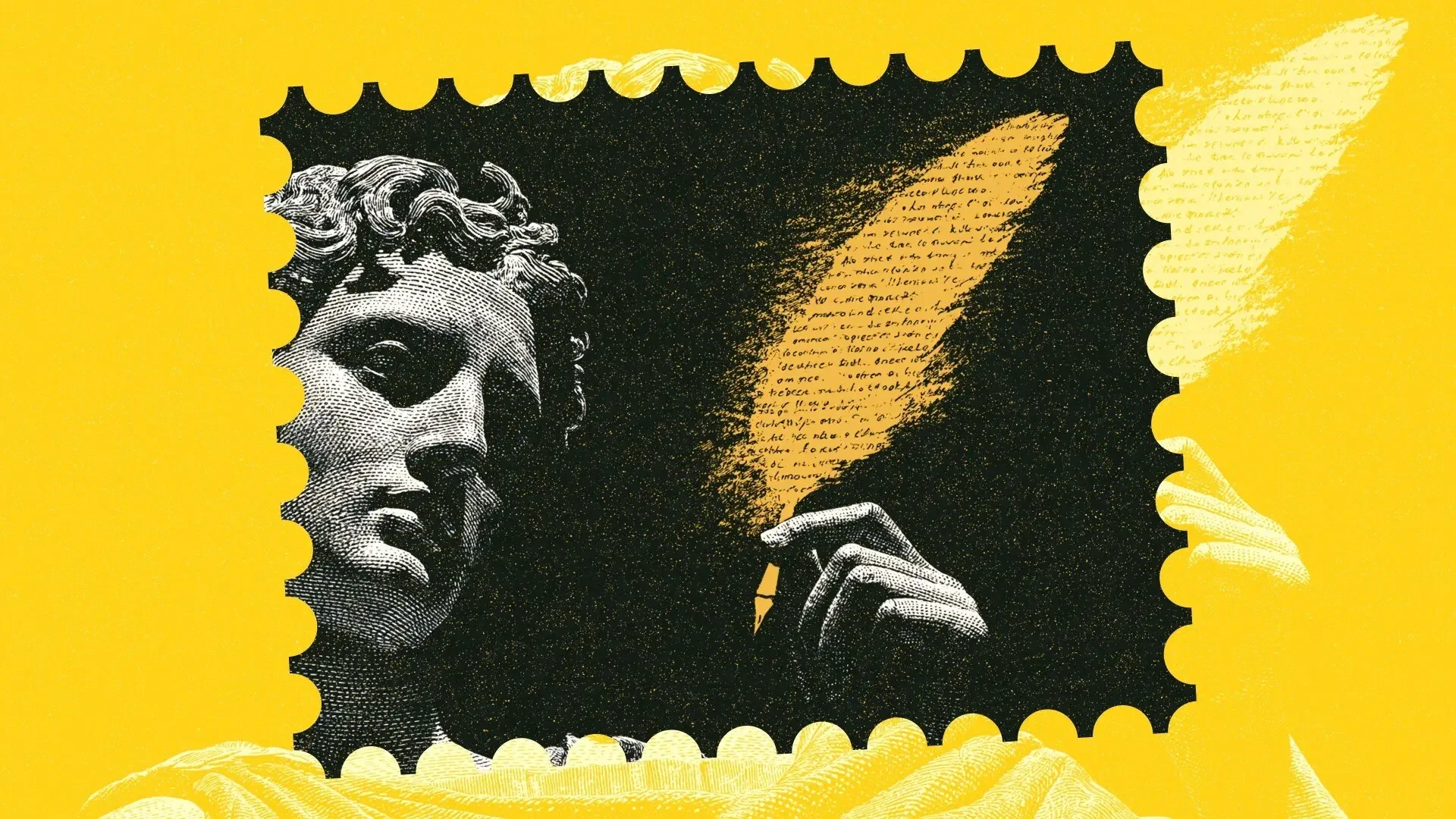
Every, founded in 2020, is a media and software company that publishes a daily newsletter, builds software products, offers courses, and provides AI consulting. Its design studio, Order, rooted the identity in the history of writing, with a custom typeface based on the Palmer Method of 19th-century business handwriting. Every's classical images, many of them credited to Midjourney, extend that lineage, like an engraved Renaissance head holding a quill inside a yellow postage stamp. The bold contrast is a textbook use of the Von Restorff effect, the tendency to notice whatever stands out, and it invites curious, ambitious readers into the conversation.
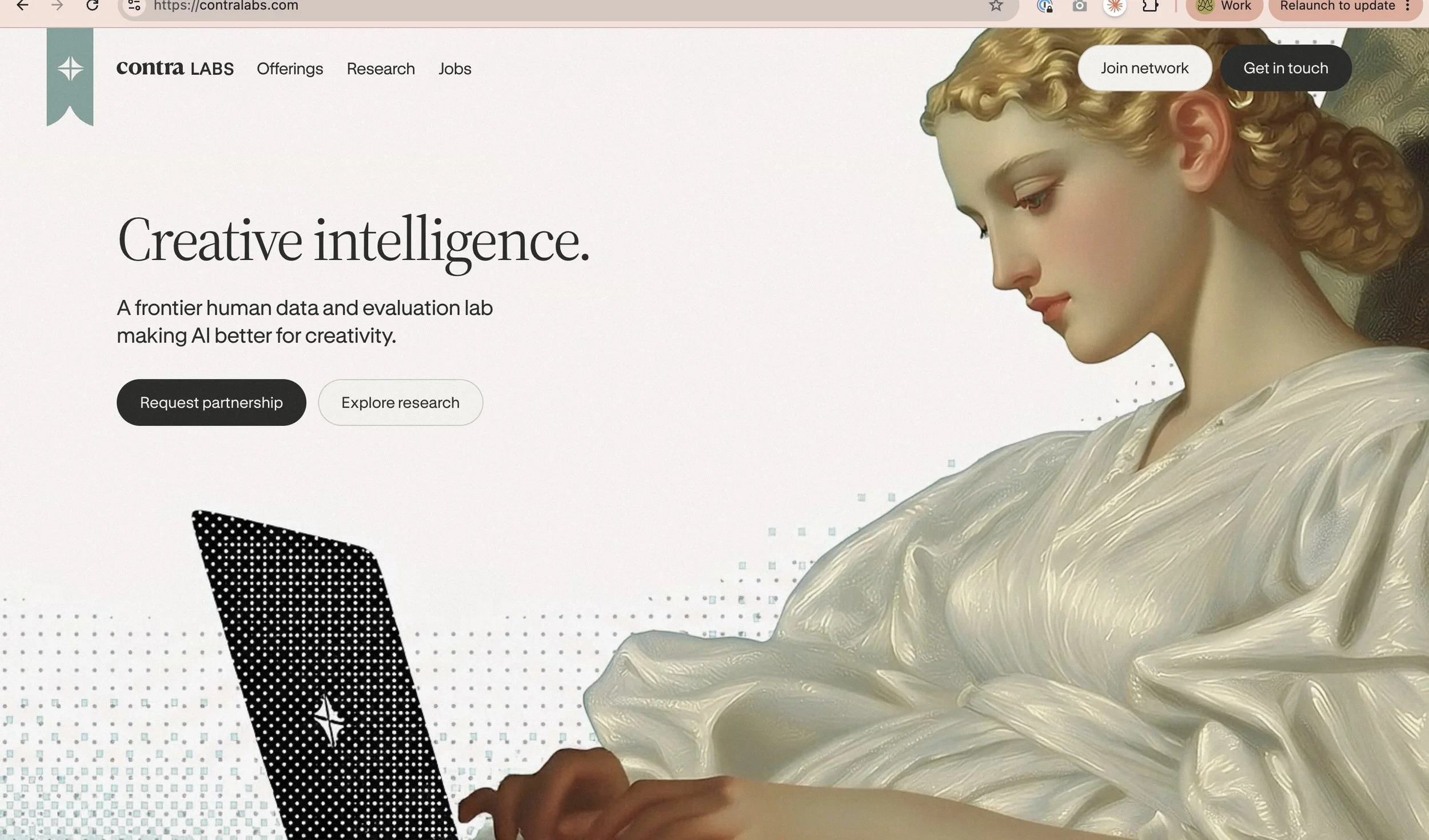
Credit: Contra Labs
Contra Labs builds the evaluation layer for creative AI, helping AI tools judge quality the way expert creatives do. Its design partner, Heed Collective, gave the brand a human, cultural perspective by drawing on the history of human creativity and pairing classical art with contemporary digital elements. Heed titled the project “Human Creativity Enters a New Renaissance.”
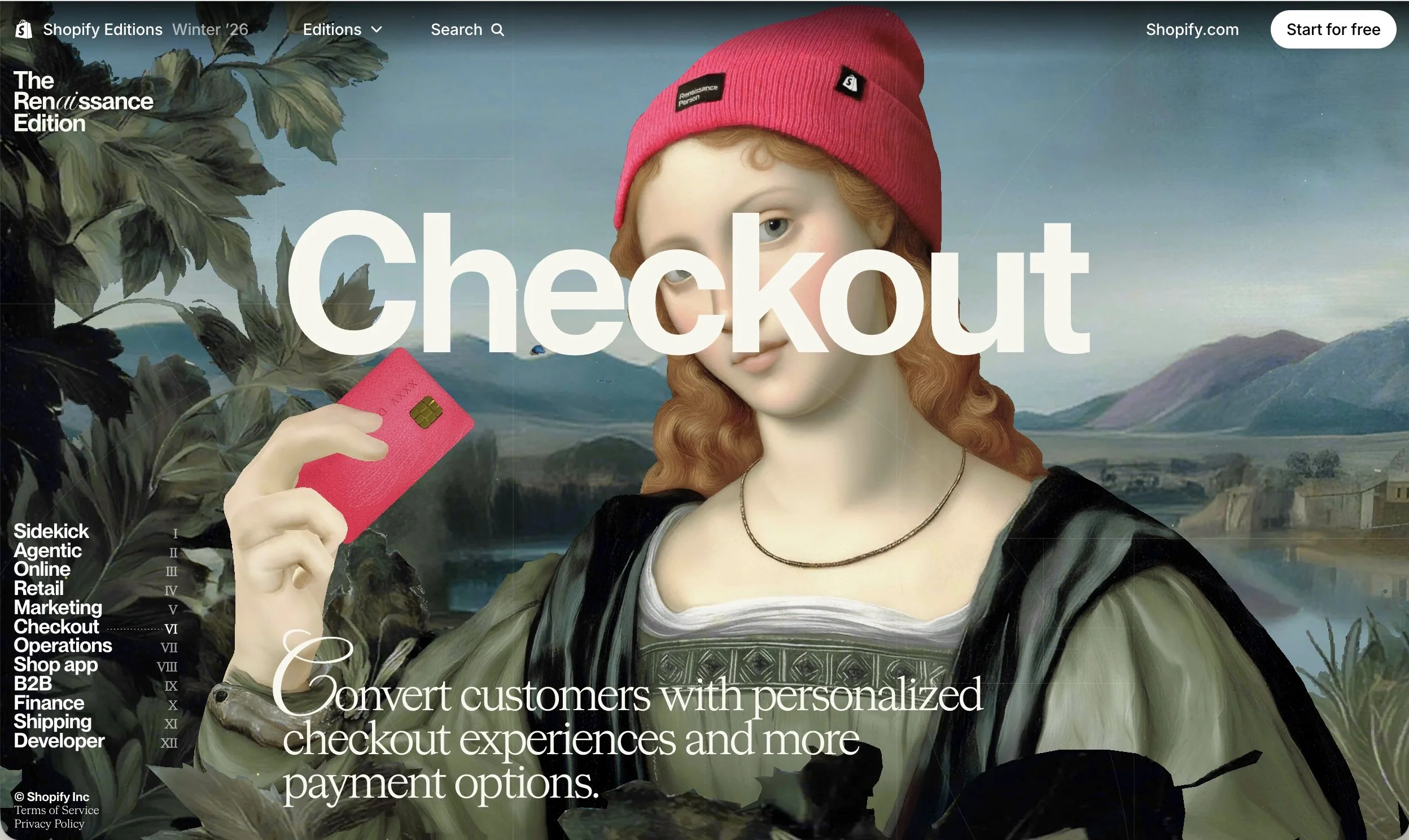
Credit: Shopify
Shopify's Winter '26 product release, branded "The RenAIssance Edition," turned 150+ updates into a scrolling gallery of Renaissance paintings and cast its merchants as the modern masters, with AI as the new tools in their workshop. The edition drew more than 3.5 million sessions, up 30.5% on the previous one, and 260+ press stories across 10 markets.
Why now, and should you follow?
The trend is a response to cheap images. Illustration studio GetIllustrations argued this year that once AI tools made clean images free, visible human craft became the premium signal. The look also spreads fast because it is easy to approve: a marble head reads as premium in a board deck and signals ambition to investors at a glance.
Every visual language has a lifespan, though. Banner blindness sets in as people tune out what they see repeatedly, and GetIllustrations gives the literal Renaissance pose maybe 18 months as a fresh signal. Now that antique faces are everywhere, the face alone will stop setting a brand apart.
What keeps these five brands distinct is the idea underneath. Every owns the history of writing, Ivo owns intelligence by design, Chamelio owns precedent, Contra Labs owns a new Renaissance for human creativity, and Shopify casts its merchants as the masters. Each backed its image with serious design talent, from agencies and studios to in-house teams.
Founders can borrow the look in three moves
Start with a belief. Decide what your AI does for people, and let your brand pillars guide the image from there.
Choose a lineage your buyer already respects. Lawyers respect Roman law, and creatives respect the old masters. Find what your audience respects.
Make the craft visible. Invest in commissioned illustration, custom type, and tools that keep the system consistent, and credit the people behind the work.
What does your buyer need to feel in the first second on your homepage, and which image on that page does that work today?