
Brand building: creating desire from day one
The case founders don't hear
Most technical founders come to branding late, and usually under pressure. The product is built, the pitch is being refined, and someone in the room says the website looks like every other company in the space. So they hire someone to make it look better, and that's roughly where the thinking stops.
Danielle Laroy and Natalyia Kalesco, co-founders of Good Side Studio and Pact respectively, spend most of their working lives trying to reframe that instinct. Both run small, senior boutique studios working almost exclusively with purpose-driven companies. Their argument, made across ten tips at the Life Upgraded event, is that aesthetics are downstream of something more important, and that most founders never do: the upstream work.
The problem isn't how you look. It's what you're communicating.
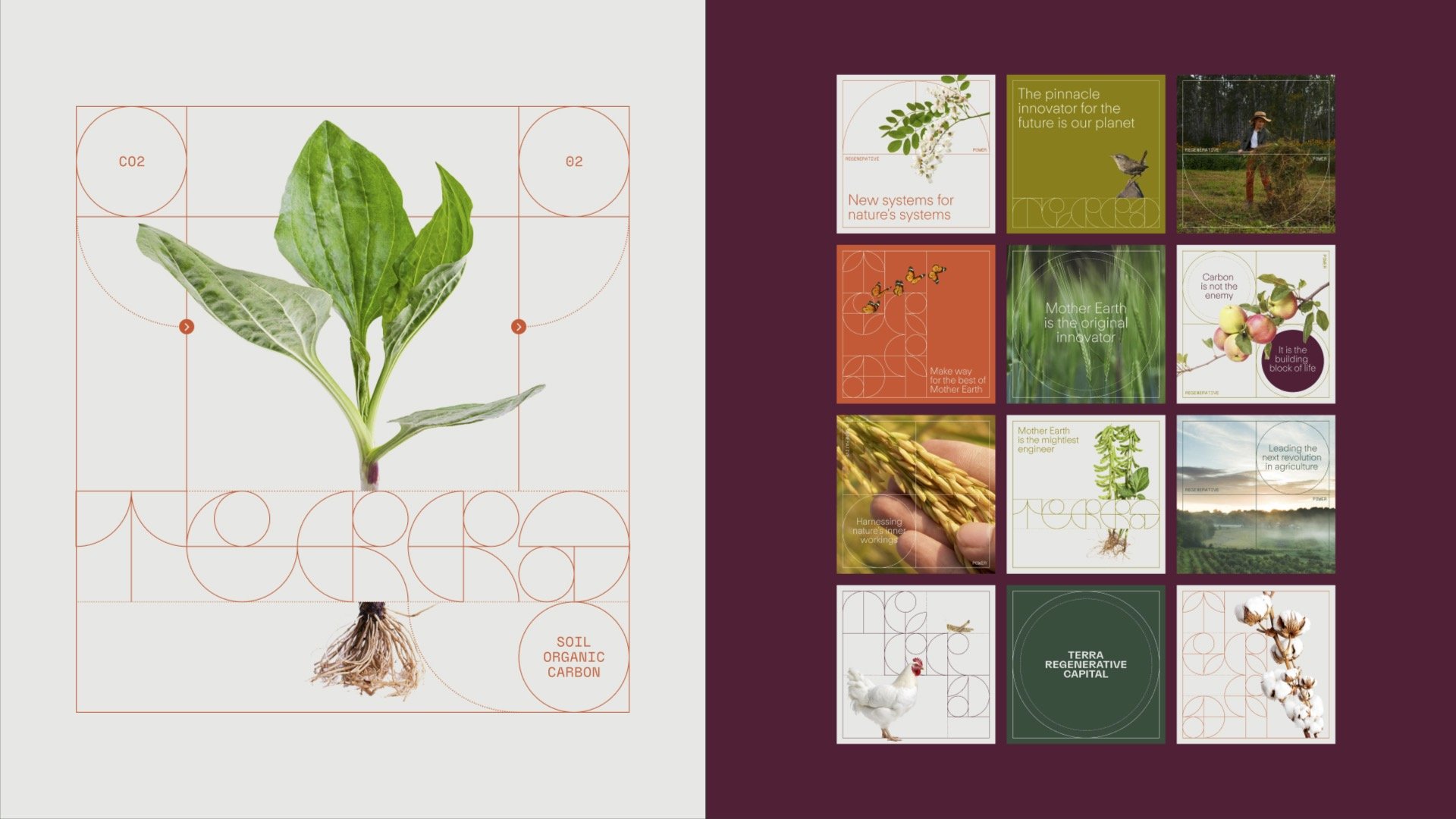
The first thing a brand has to do is solve a communication problem. For Terra Regenerative Capital, a firm investing in supply chain infrastructure for regenerative agriculture, the problem was twofold: the asset class wasn't being taken seriously by investors, and the firm's position in the middle of a complex supply chain was nearly impossible to explain, even to people they were actively trying to bring on board.
The visual identity Pact built for them, a flexible trellis system mixing technical drafting with natural imagery, wasn't chosen for aesthetics. It was chosen because it positioned regenerative agriculture as infrastructure rather than ideology. The language they developed framed nature as the original innovator. Every design decision was doing argumentative work.
Credit: Pact Studio
There are right moments to invest, and they're earlier than you think
Laroy identified four inflection points where branding investment tends to generate the clearest return: ahead of a fundraising round, when entering a new market, when early signals of product-market fit start coming in, and when a founder looks around and realizes they're indistinguishable from their competitors.
The last one is more common than founders expect. In sustainability, everything tends toward green. In tech, everything tends toward blue. The sea of sameness isn't a failure of taste: it's what happens when everyone optimizes for the same implicit signals of credibility without asking whether those signals are doing anything for them specifically.
Credit: Goodside Studio. Ditto brand identity.
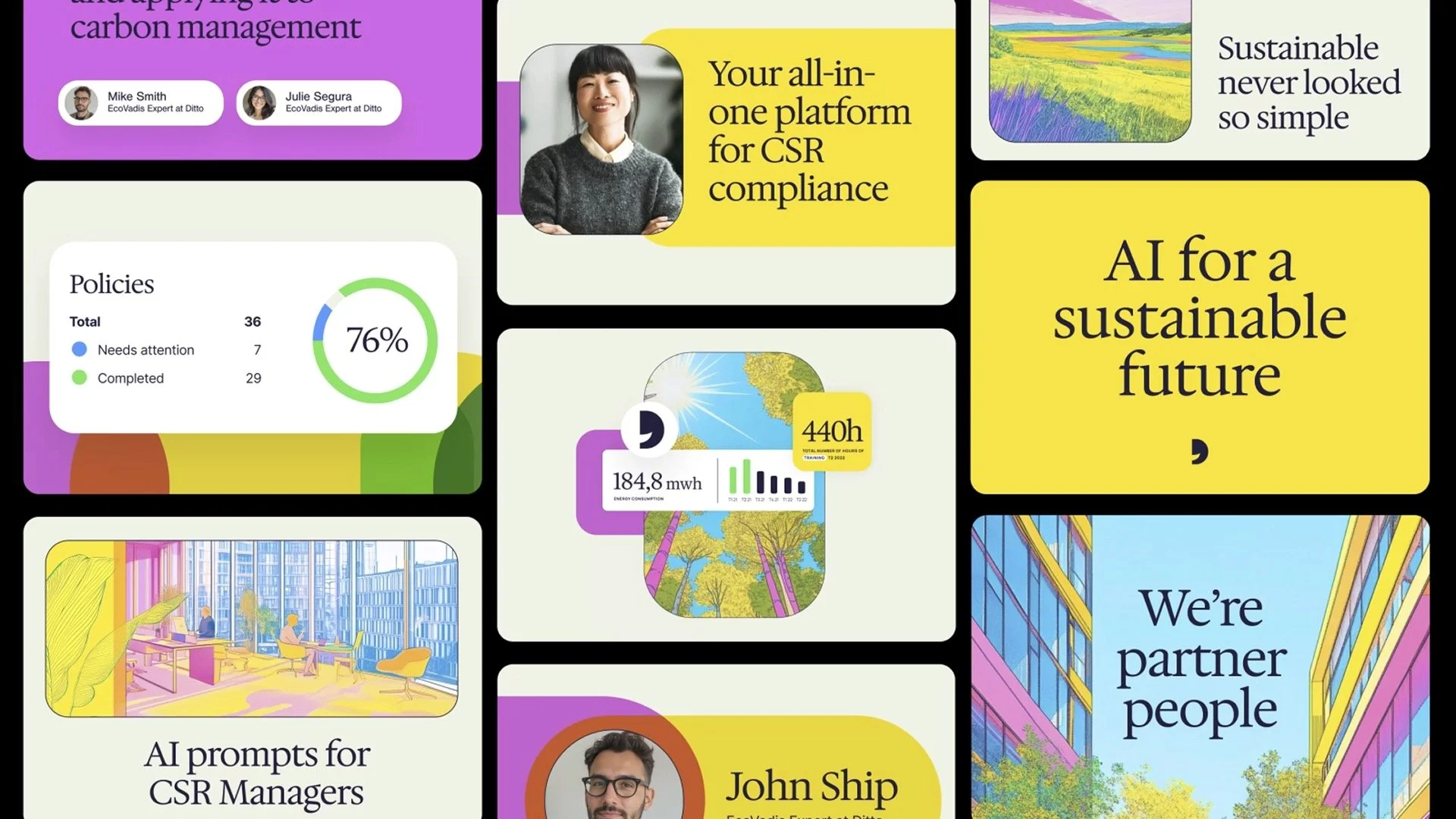
Ditto, a sustainability compliance platform expanding from France into the US, arrived with all four triggers active at once. They were entering a new market, the category was visually undifferentiated. Good Side built their new identity around the ditto mark, a typographic symbol used to indicate repetition on forms, which sat cleanly at the heart of what the product actually did: take what's true about your sustainability program and replicate it across every compliance requirement.
The visual language was deliberately warm and friendly, itself a competitive move in a category that defaulted to cold and technical.
Your point of view is not something a designer (or LLM) can invent
The sharpest line from the session came as a throwaway: "Don't outsource this to Claude." A brand partner can help a founder develop and articulate a distinctive perspective, but the perspective has to exist first. The more clearly a founder understands what they actually believe, and why their approach is genuinely different, the more effective the design work becomes.
Credit: Goodside Studio. Superorganism brand identity.
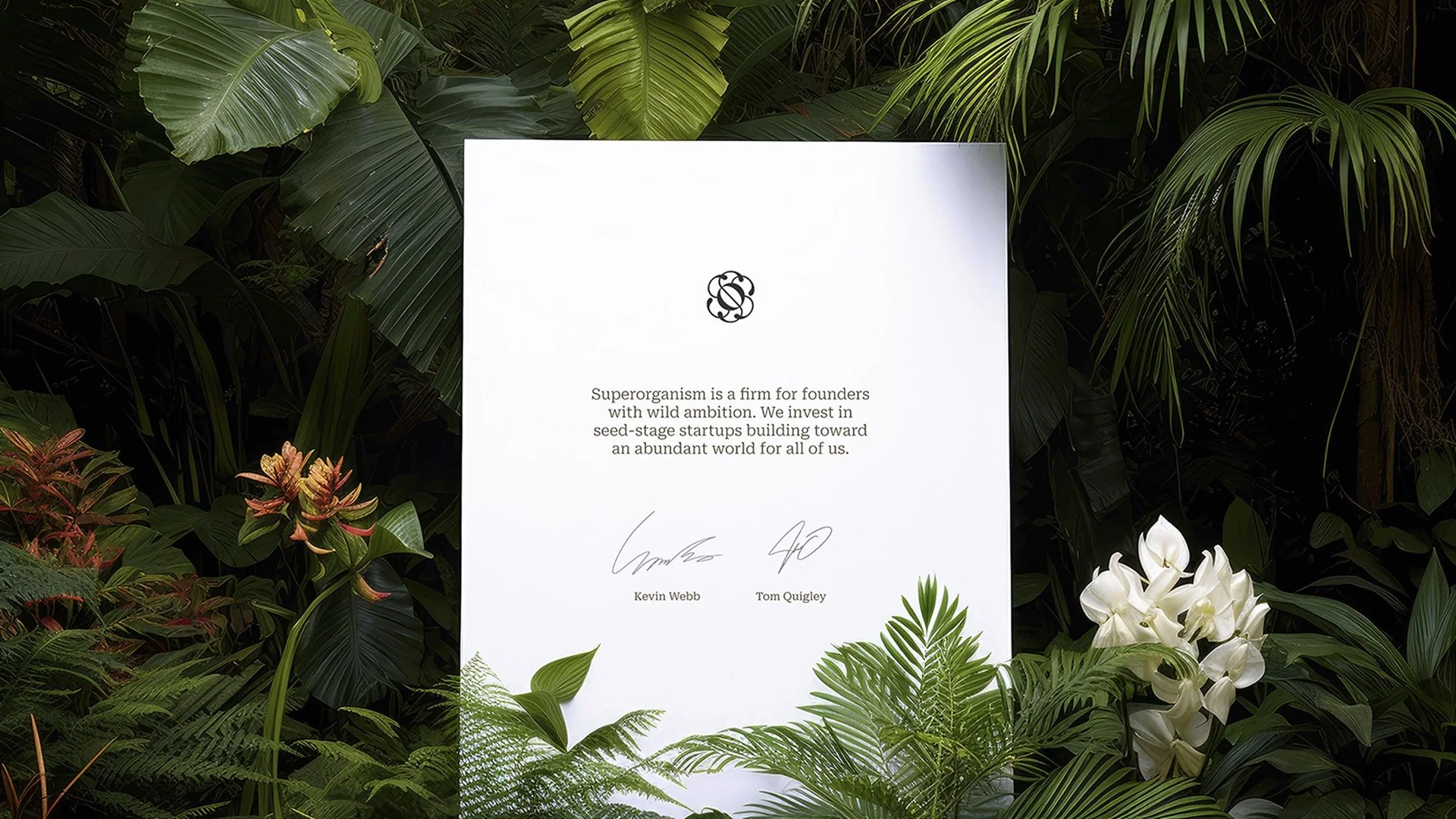
Superorganism, a venture firm co-founded by a venture capitalist and a conservation technologist investing in companies working to end the mass extinction crisis, arrived with an unusually clear worldview. Goodside anchored their identity around abundance, a concept that worked simultaneously as an ecological vision and a financial one. The resulting brand celebrated nature as it exists and as it could exist, with species literally breaking out of their bounding boxes. It is not possible to confuse it with another venture firm. That's the goal.
The non-audience matters as much as the audience
One of the more counterintuitive points from the session was about narrowing deliberately. The Motley, a mixed-use development in Nashville, was built for a new kind of resident coming into the city,people seeking something more communal and considered than the standard offering. The brief was to avoid every Nashville cliché while still creating genuine desire.

Credit Pact Studio. The Motley conceptual work.
The solution was to stop trying to appeal to everyone. A brand that speaks clearly to a specific audience tends to create more genuine desire than one optimized for broad legibility. The Motley's identity, a typeface built from three towers, marks that mix and match like an exquisite corpse, creates intrigue rather than explanation. Desire rarely comes from being obvious.
A brand is a system, not a set of assets
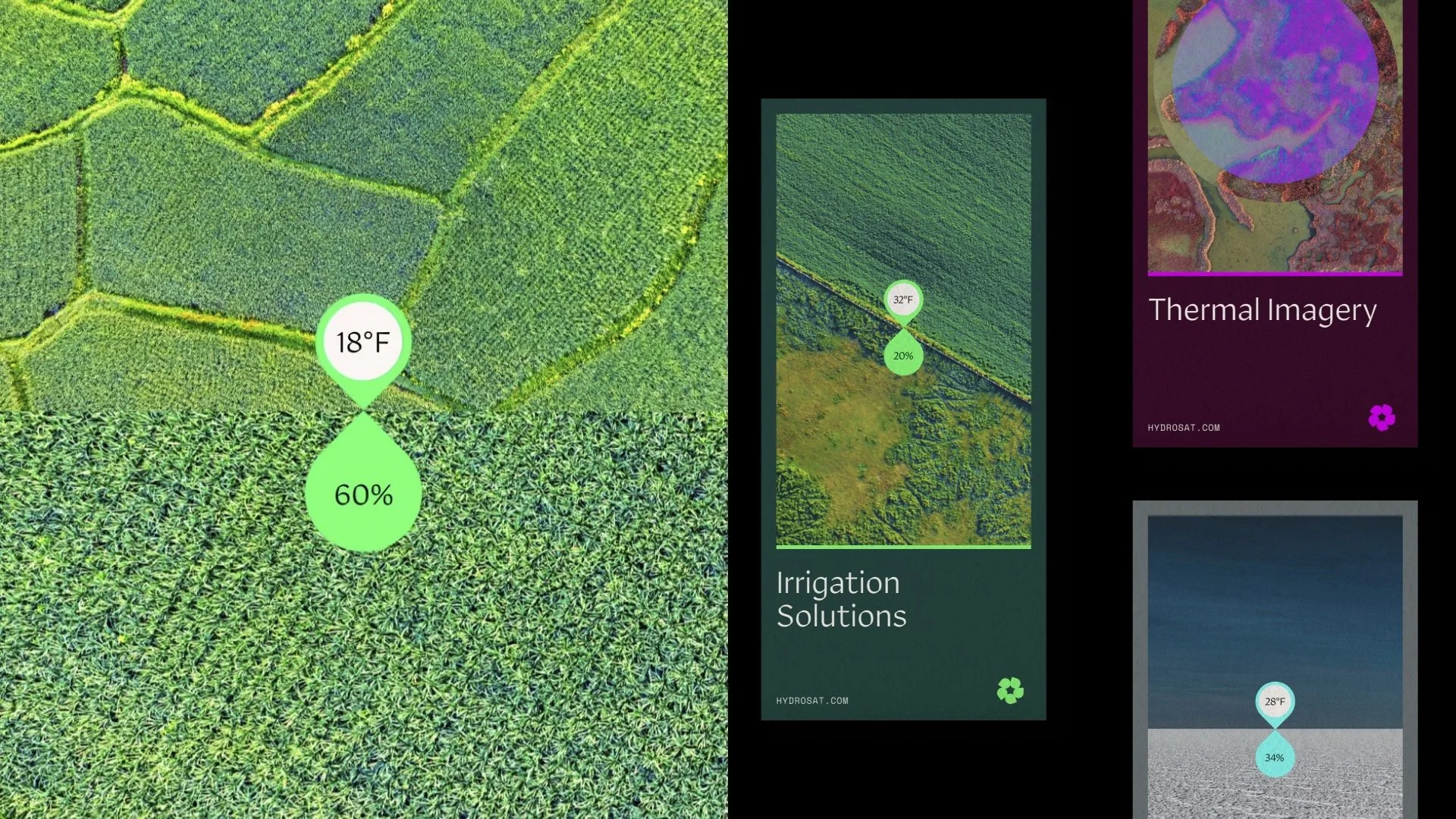
Two of the panel's tips pushed at the same idea from different angles. Think about your brand as a connected ecosystem where every element earns its place by doing real work. Hydrosat, a geospatial thermal imaging platform, needed a visual language that was simultaneously technical and grounded ( satellites), but anchored in agriculture and food supply. Pact built a mark where a location pin becomes a water droplet becomes a satellite orbit becomes a flower. The color palette pulled from both natural earth tones and thermal imaging data. Nothing in the system was decorative.
Then think about every element as a system within itself. A sustainable wood company connecting the lumber supply chain from land owners to high-end architects needed an illustration style that could speak to wildly different audiences, depict both abstract data and literal forest scenes, and function practically as a mapping tool. One illustration style, built to do all of it.
Credit Pact Studio. Hydrosat brand identity.
The practical implication for founders is that brand work isn't finished when the logo is delivered. The value comes from a system flexible enough to grow with the company and specific enough to remain recognizable throughout.
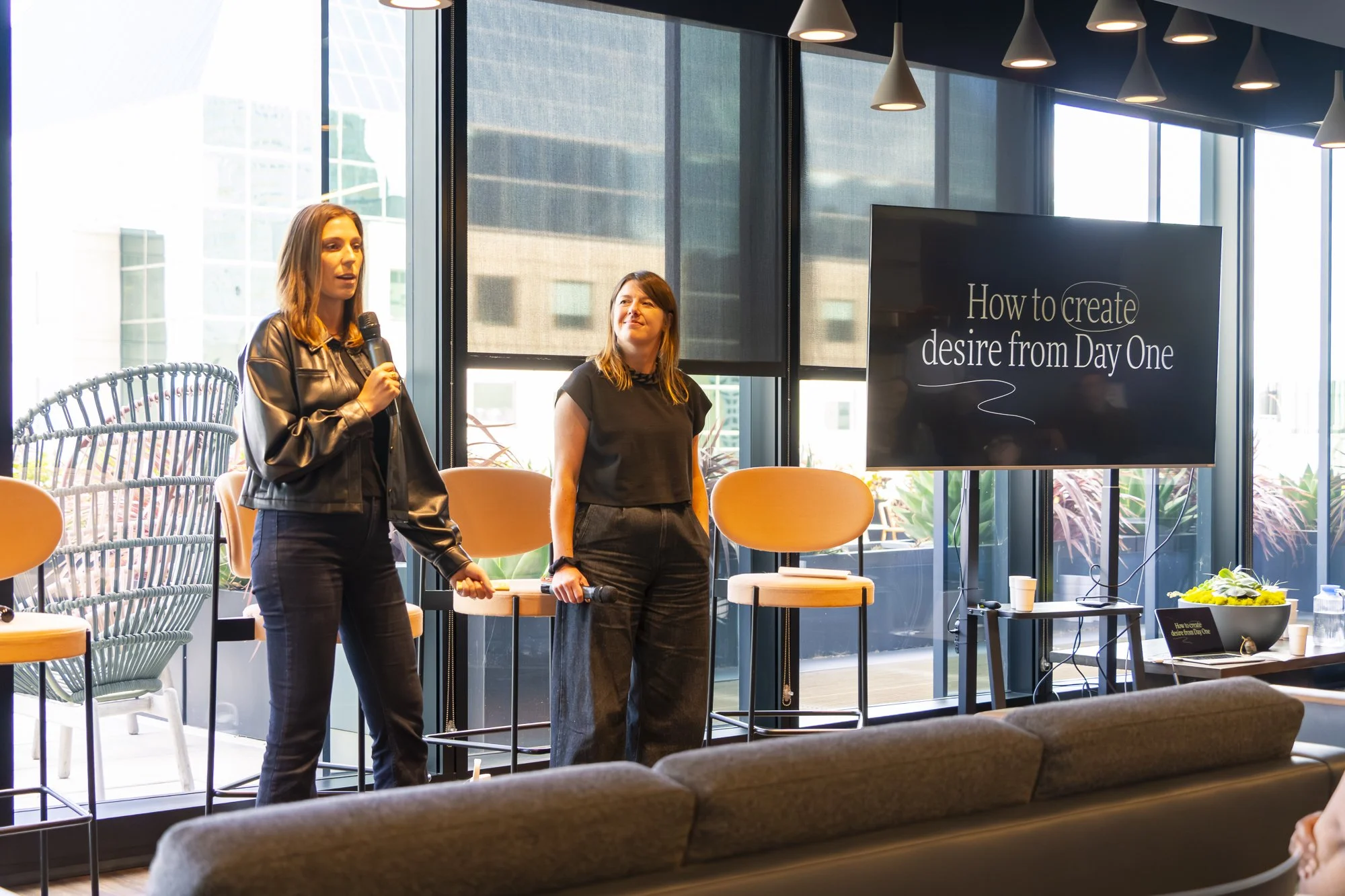
Danielle LaRoy, Co-Founder, Goodside Studio, Natalia Kowaleczko, Founder, Pact Studio
The brand lives in moments you don't control
Dirty Vine, a natural wine company, came to Good Side at inception wanting to occupy the space between stuffy traditional wine culture and the more intimidating edges of the natural wine world. The identity they developed was soil-obsessed and farm-first. What was less obvious was the work done around activation, the moments where the brand is actually experienced.
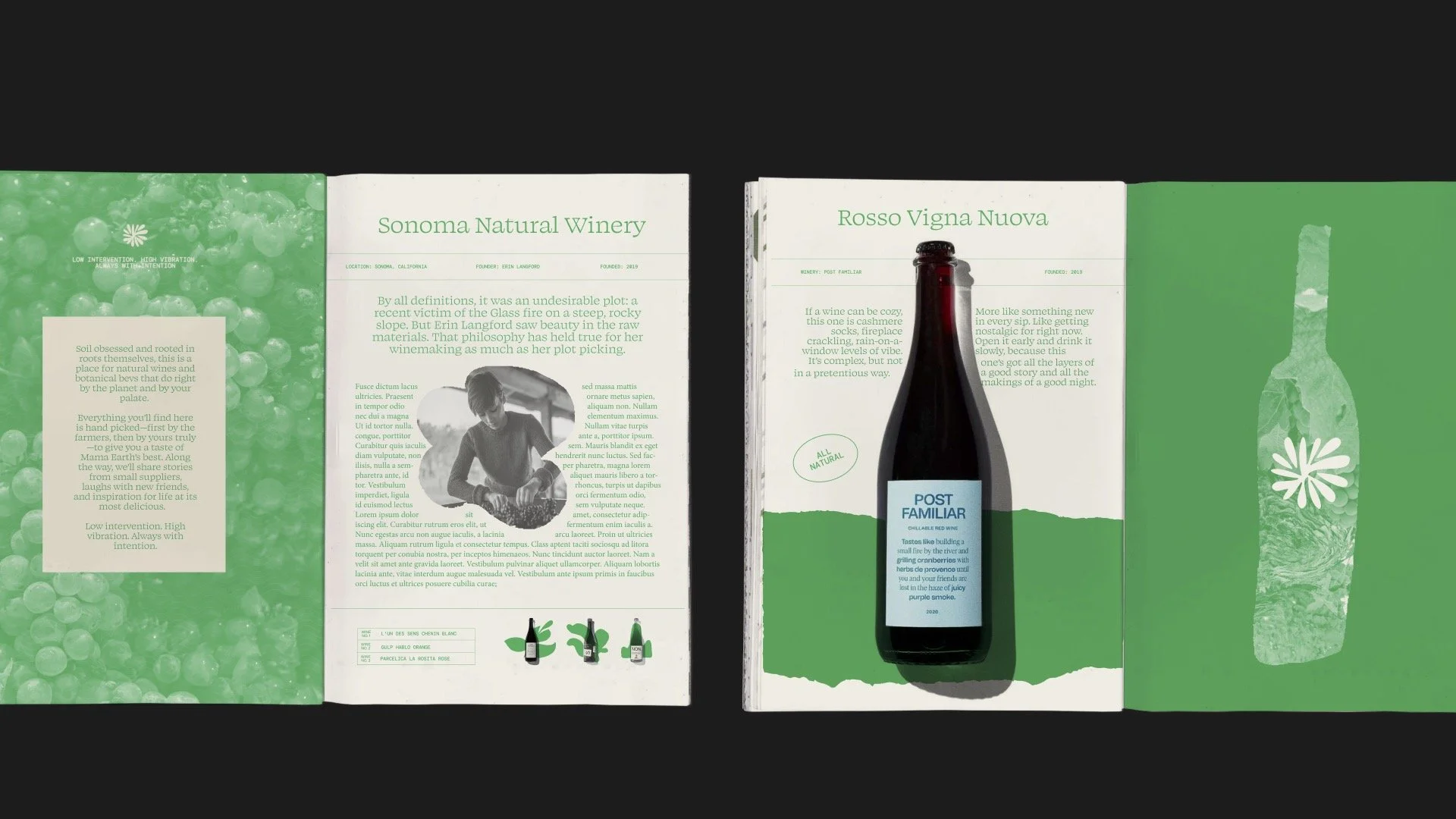
Credit: Goodside Studio. Dirty Vine brand assets.
New club members receive a wine tasting journal. The leather is made from discarded grape skins. The online bottle shop doesn't sort by varietal, it sorts by occasion, by the actual way people choose wine. Each of these decisions cost something to think through, and each one is doing work that the logo alone never could.
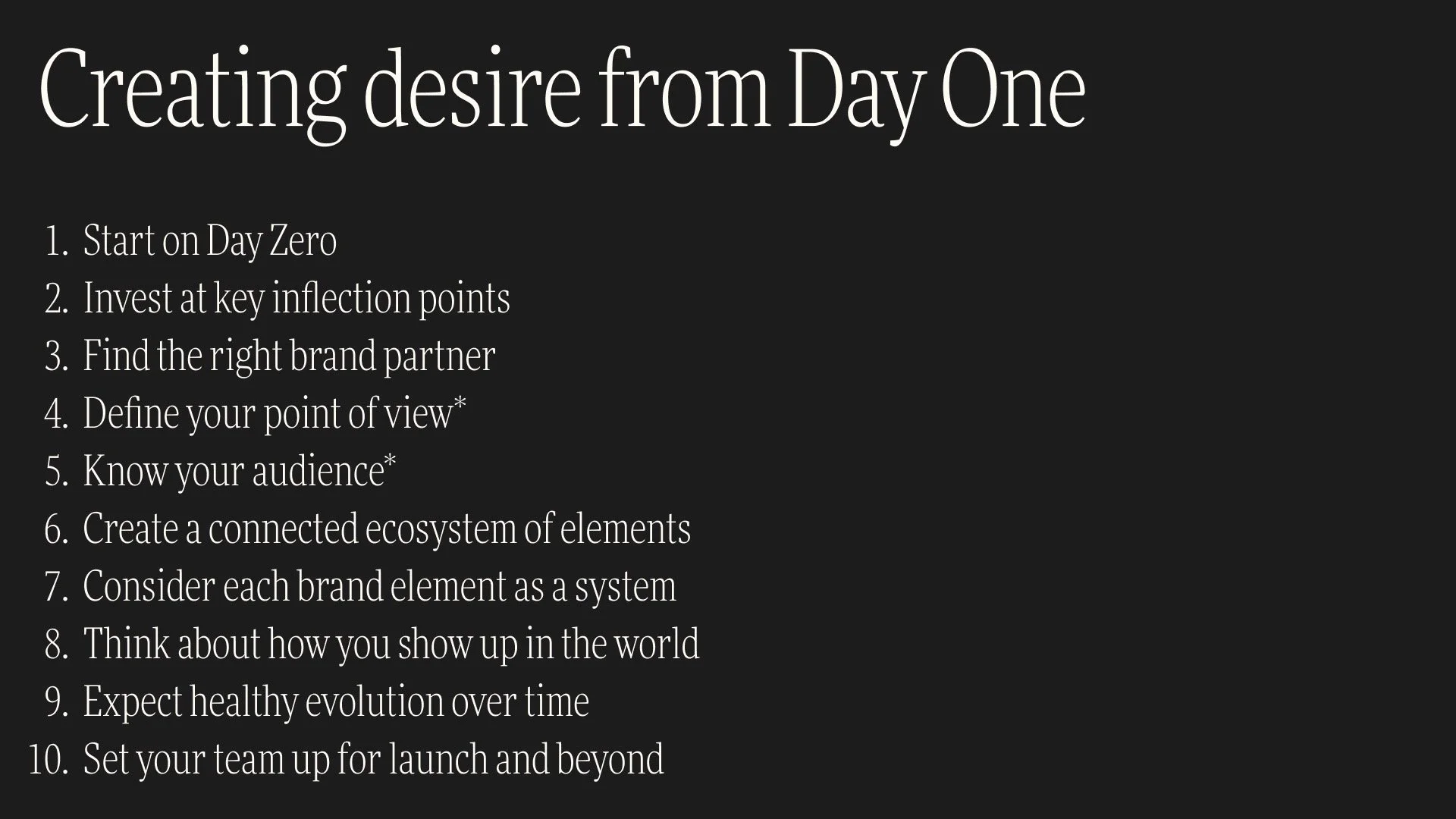
Ten tips.
Brand is a long game, which is why it needs to start early
Metress, an energy efficiency financing company, came to Pact after eleven years as a category pioneer that had been lapped aesthetically by newer entrants. The refresh that followed used the same typeface, the same colors, and the same logo — just applied with more clarity and confidence for a more sophisticated audience. Two years later, as their sales motion shifted again, the system adapted again. Same foundation, new expression.
The lesson isn't that brands need constant redesign. A well-built brand system is designed to evolve, and that evolution is far easier, and cheaper, when the original work was done with that in mind.
For founders who haven't thought seriously about brand yet, the question worth sitting with isn't whether you can afford to invest in it. It's what it's costing you not to — in the rooms you're not winning, the story you're not telling clearly, and the position in the market that someone else is quietly claiming while you're busy building.
.
.