
Plastic detox: The cultural shift
Julia Marsh grew up playing in the tide pools of Monterey Bay. She became a designer. At some point those two things collided, she realized that the packaging she was designing for a living was part of the same pollution she'd grown up trying to understand. Sway, the company she founded, starts from a simple reframe: packaging has always done one job, protecting what's inside. It should also protect what's outside.
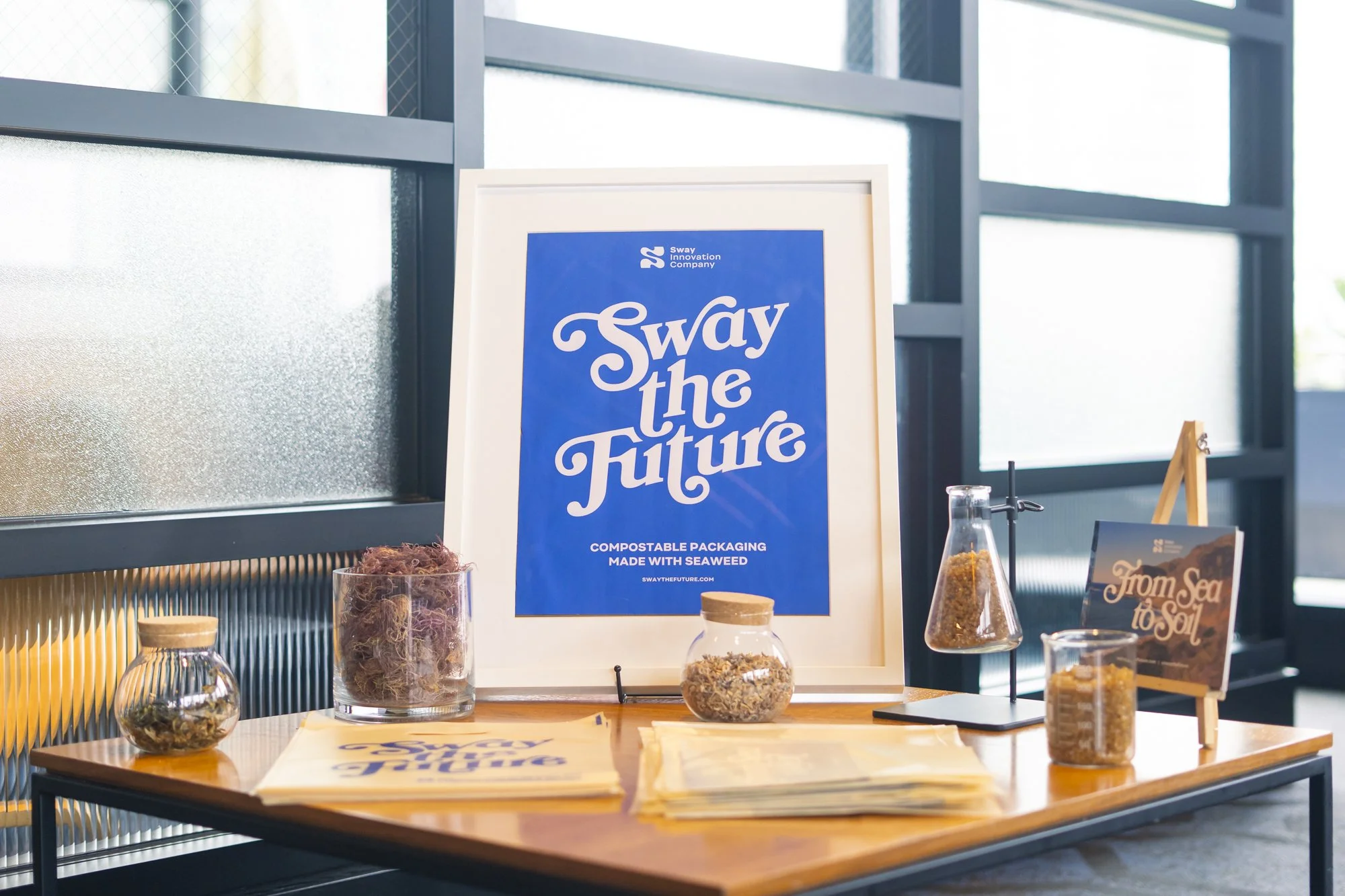
The material she built to do that starts with seaweed, which has been developing natural polymer properties for about a billion years underwater. Seaweed is durable, resilient, and naturally plastic-like, those are the properties that let it survive.
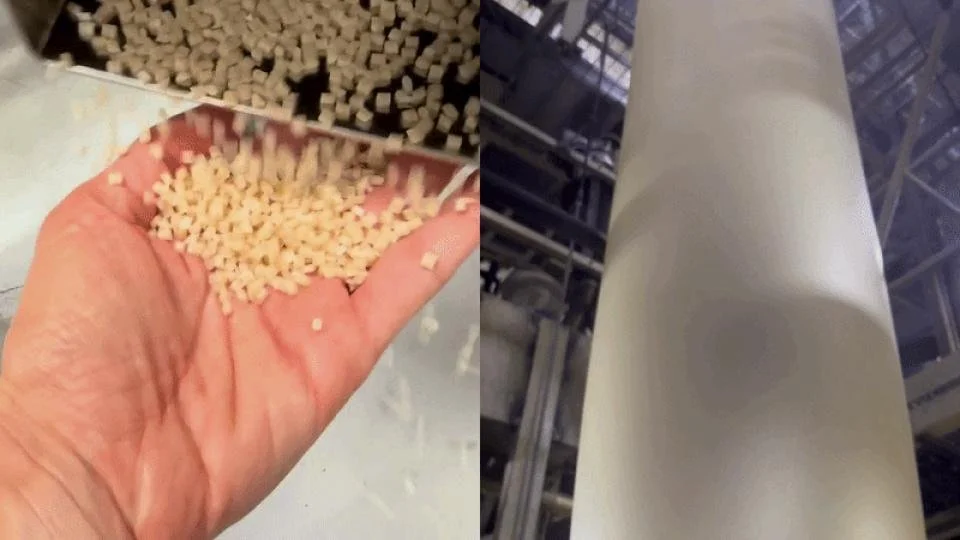
Sway extracts those polymers and processes them into a thermoplastic pellet that can run on standard commercial plastic manufacturing equipment. A bubble blown at a partner facility in the Midwest, over five feet wide, five stories tall, is seaweed running through machinery designed for plastic, producing bags at scale. The operator doesn't need new infrastructure. They need a different input.
That was the design thesis from the beginning: don't build something that requires the industry to change around you. Build something that fits inside the system that already exists.
What the supply chain actually looks like
Every million Sway bags produced removes about 15 tons of carbon, absorbs roughly 3,000 pounds of excess pollutants from the ocean, and protects around 30 acres of habitat. Those aren't estimates derived from lifecycle models, they're traceable back to specific farms and processors, which means a brand using Sway packaging can claim that impact directly and accurately. For a lot of Sway's brand customers, that traceability is as valuable as the packaging itself. They're actively improving ocean health, and they can show it.
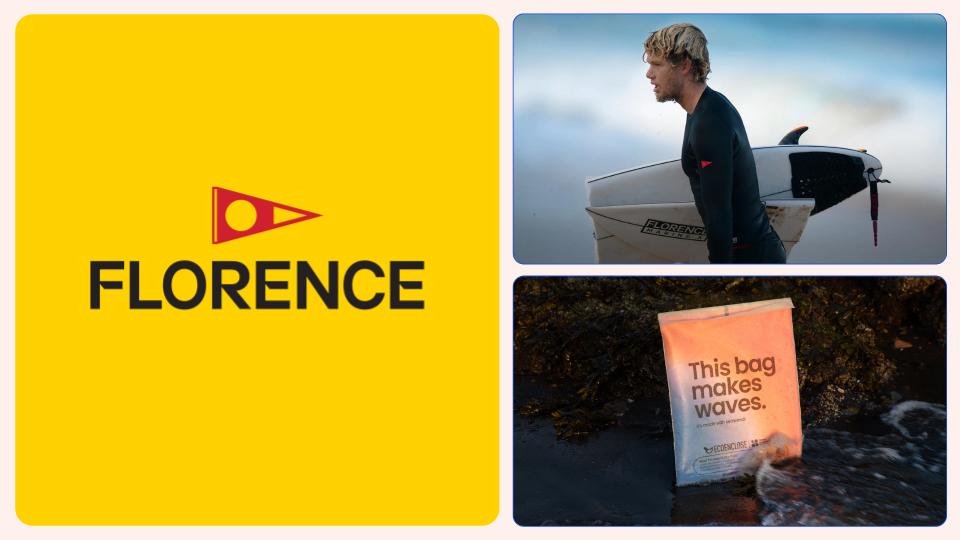
Florence is one of Sway’s partner
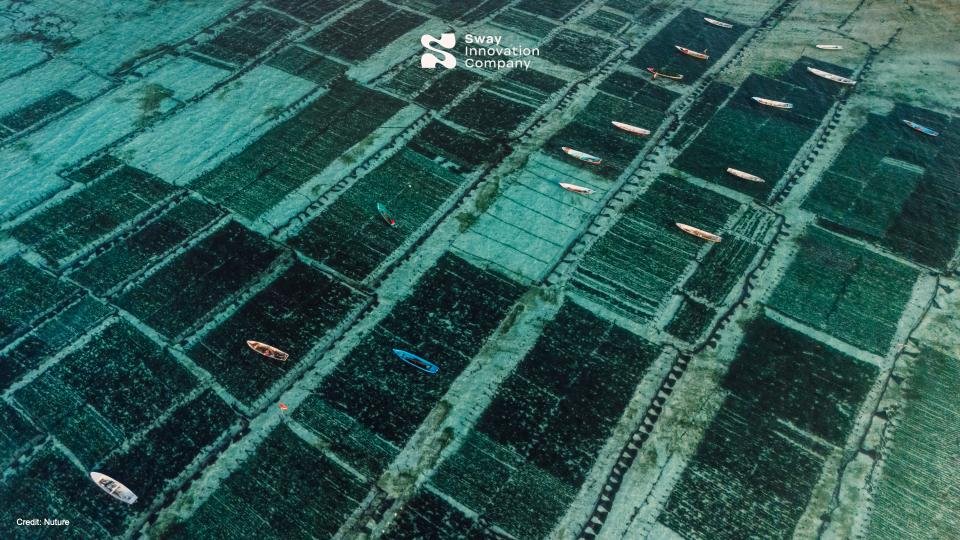
Sway sources from farms across Southeast Asia, Latin America, the Caribbean, and Europe, working across more than 10,000 species of seaweed rather than depending on any single variety. This wasn't just an ecological choice, it was a risk management one.
Gracie White, who leads ocean investments at CI Ventures and has a background working on kelp farms, noted that several seaweed startups have run into trouble by building around a single species, typically kelp from emerging US aquaculture. When your supply is concentrated and the market is still developing, you're taking on two forms of uncertainty simultaneously. Sway's diversified sourcing removes one of them.
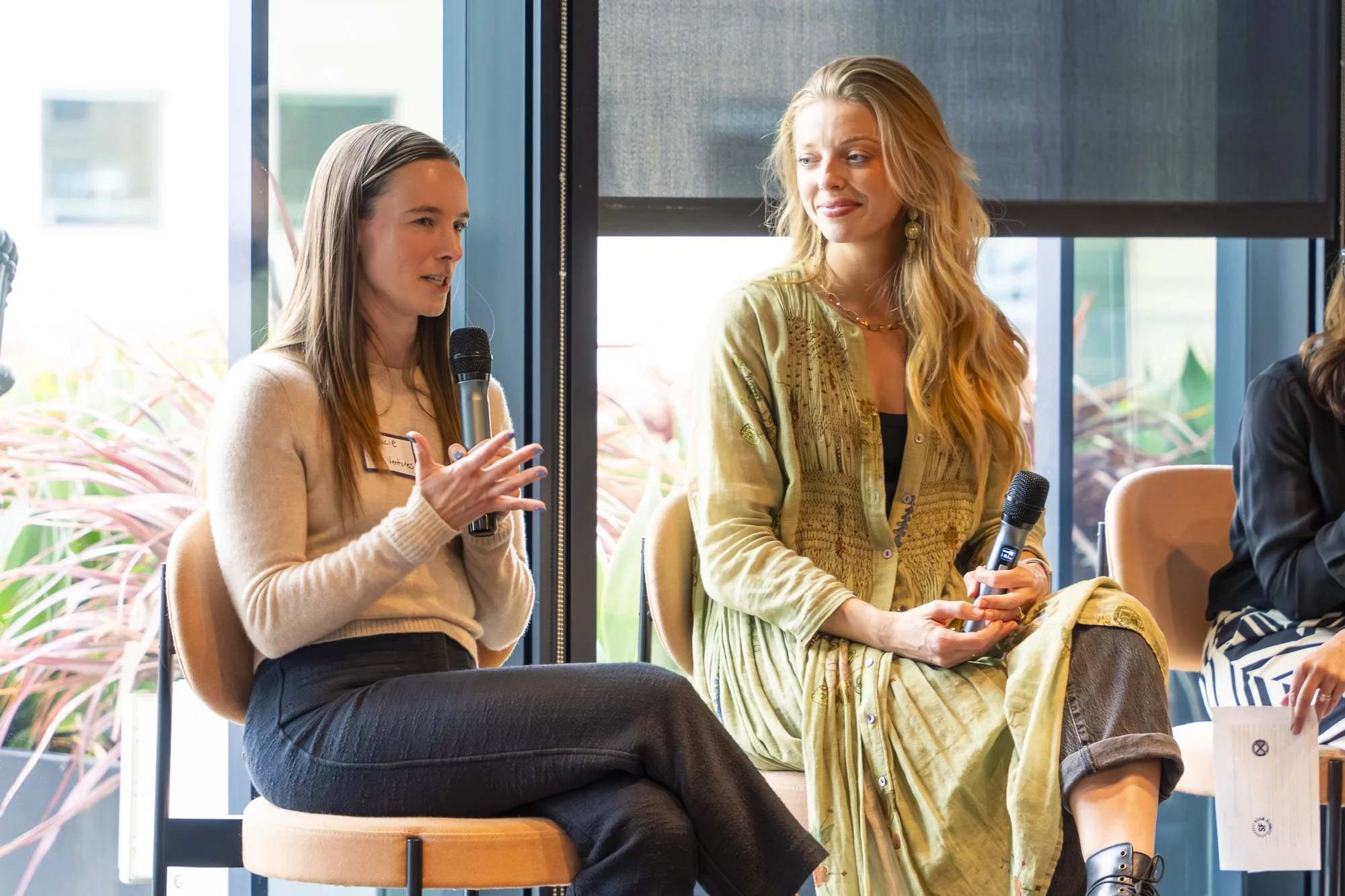
Gracie White and Julia Marsh
CI Ventures made an exception to nearly every part of their usual investment criteria to back Sway. They focus on emerging markets and non-dilutive instruments. Sway is a US-based company going the venture route. Gracie shared diligence on the materials side with Alante Capital, whose background was in manufacturing and processing, while she focused on upstream supply. Together they built enough confidence to move. The investment thesis wasn't primarily about plastic replacement. It was about what happens upstream if Sway scales: a major buyer enters the seaweed sector at a moment when that sector is almost entirely unregulated, with the ability to set sourcing standards that the industry currently has no obligation to follow.
The partnership that changed the trajectory
Marsh launched Sway imagining that she would manage the full chain: work with farmers, handle processing, manufacture the product, distribute it to brands, oversee composting. It was too much. The turning point came through a partnership with EcoEnclose, a sustainable packaging company that already had the logistics infrastructure and thousands of customers actively looking for alternatives to plastic bags.
Credit: Sway
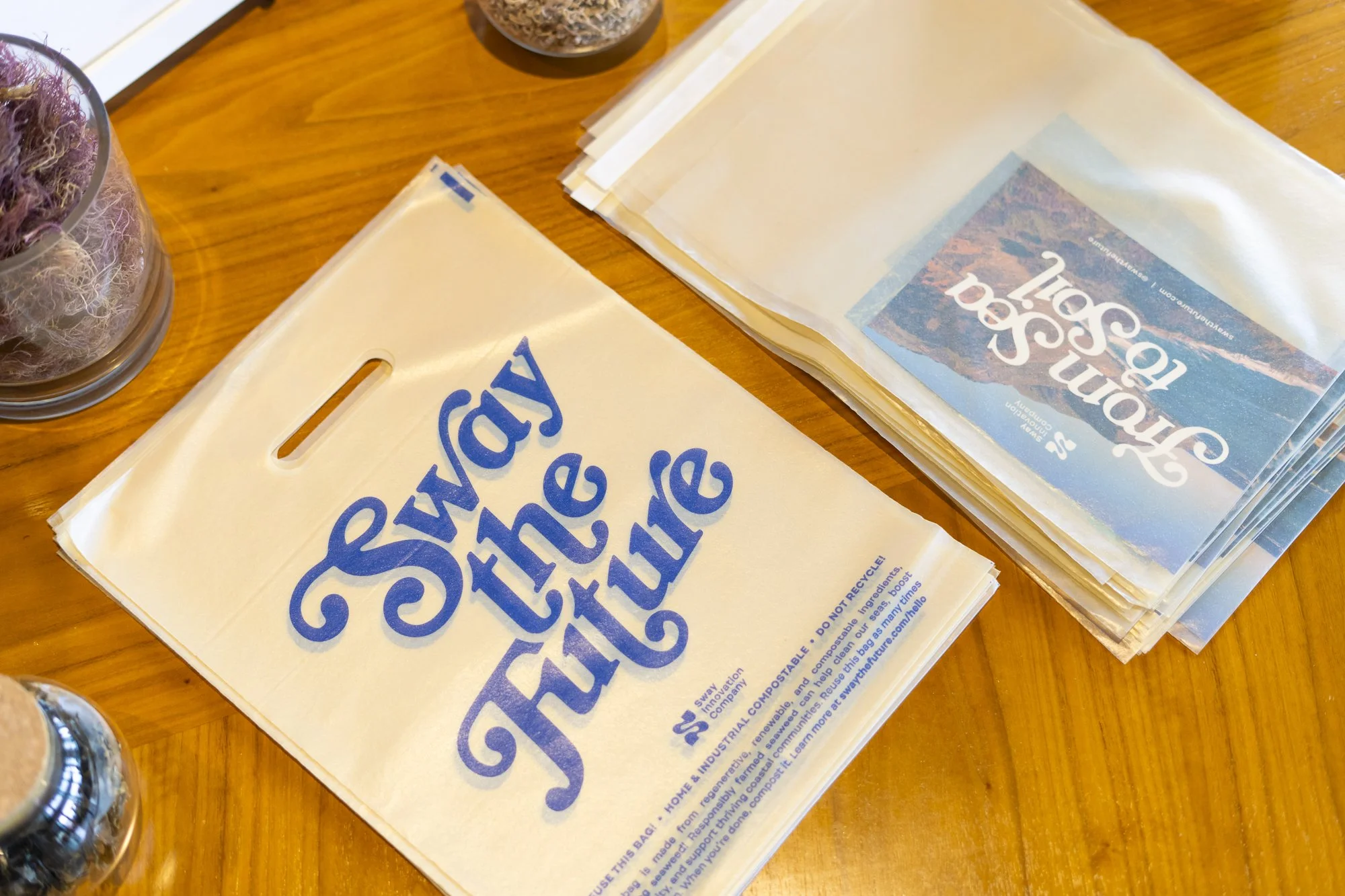
The model shifted: Sway sells the film to EcoEnclose, who manufactures the bags and handles distribution. What looked like a step back from vertical integration was actually the move that took Sway from inching into the market to being in it. The access to customers EcoEnclose brought wasn't something Sway could have built on its own timeline. And the knowledge EcoEnclose had accumulated through years of running a packaging business, supplier relationships, fulfillment processes, customer expectations, was worth more than the margin Sway gave up.
The same logic shaped how Marsh built the technical side of the company. Her first full-time hire was a senior materials scientist who had spent his career in conventional plastics. That expertise, applied to seaweed-based materials from the start, compressed the development timeline in ways that outside-in innovation tends not to. When Sway brought their pellet to commercial plastic manufacturers, the people running the machines already understood the equipment and the failure modes. They just needed to understand the new material, and once it worked, the snowball effect was real.
Making the factory floor feel like the movement
The harder challenge on the manufacturing side was mostly cultural. Plastic manufacturing is a well-optimized system, and every minute a line isn't running is money lost. Giving Sway time on the equipment is a concession. Getting the people running that equipment to actually care about what they're making is something else.
Marsh described workers in Ohio and Wisconsin wearing Sway vests, feeling like they're part of something bigger than the facility they show up to every day. A supplier relationship based purely on contract terms is fragile. One where the operator has genuine ownership of what they're contributing is harder to walk away from. Marsh identified this as the biggest learning from Sway's commercialization year: the question isn't just whether the material runs on the machine, but whether the person running the machine is invested in the outcome.
The founder as access point
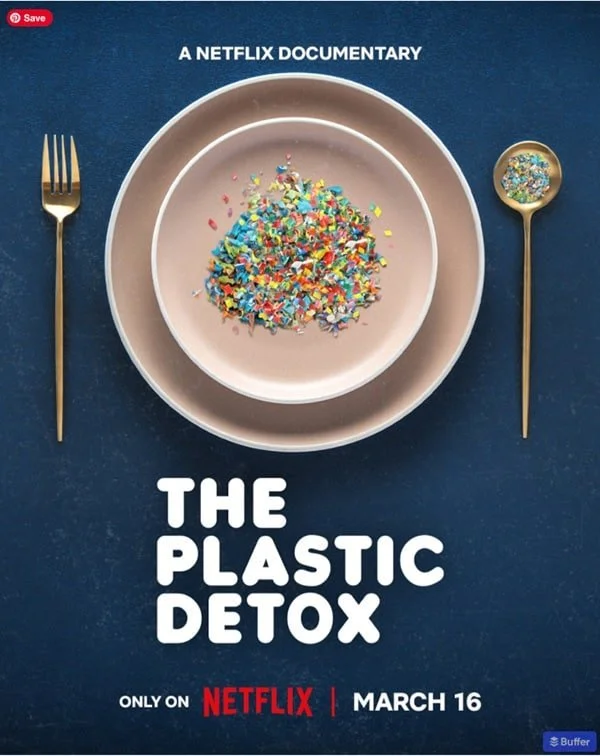
Marsh is, by her own description, difficult to separate from the company she's built. Her co-founder is her husband. The work is her life, and she's visibly present as its public face: on social media, in the Plastic Detox documentary on Netflix, in Forbes, in Time's Best Inventions list. She's explicit about why: packaging, by itself, is not a compelling entry point for most people. The ocean is. Design is. A person who grew up in Monterey Bay and became a materials scientist out of necessity is. The personal story creates multiple access points into something that would otherwise stay niche.
Credit: Netflix
The Netflix documentary was, for her, a different kind of moment than the magazine covers. Oprah writing about Sway reaches one audience. A documentary that her friends from all parts of her life watched, and then texted her about, is evidence of something different: the conversation moving outside the echo chamber where it had been circulating.
The gap that still exists
Gracie made an observation that reframes the ocean economy as an investment category. If oceans were measured as a national economy, they would represent the world's fifth largest GDP. They currently attract less than 0.01% of global investment annually. The gap between the economic value oceans provide and the capital flowing toward them is extraordinary, and it exists across every sector that touches ocean health: materials, food, fisheries, pharmaceuticals, climate.
Almost everyone is already working on something connected to ocean health, whether they frame it that way or not. Plastics, agriculture, fashion, health, the linkages are direct and underacknowledged. Becoming conscious of those linkages is itself a form of investment in the sector.
Sway is currently raising. The goal, as Marsh described it with characteristic clarity, is to keep growing because they're trying to change the world. There are 5 trillion plastic bags produced every year, fewer than 2% of which are recycled. That's a large enough problem that it will require multiple solutions, multiple materials, and multiple companies. Sway is building to be one of them.