
Product-market fit that starts with subtraction
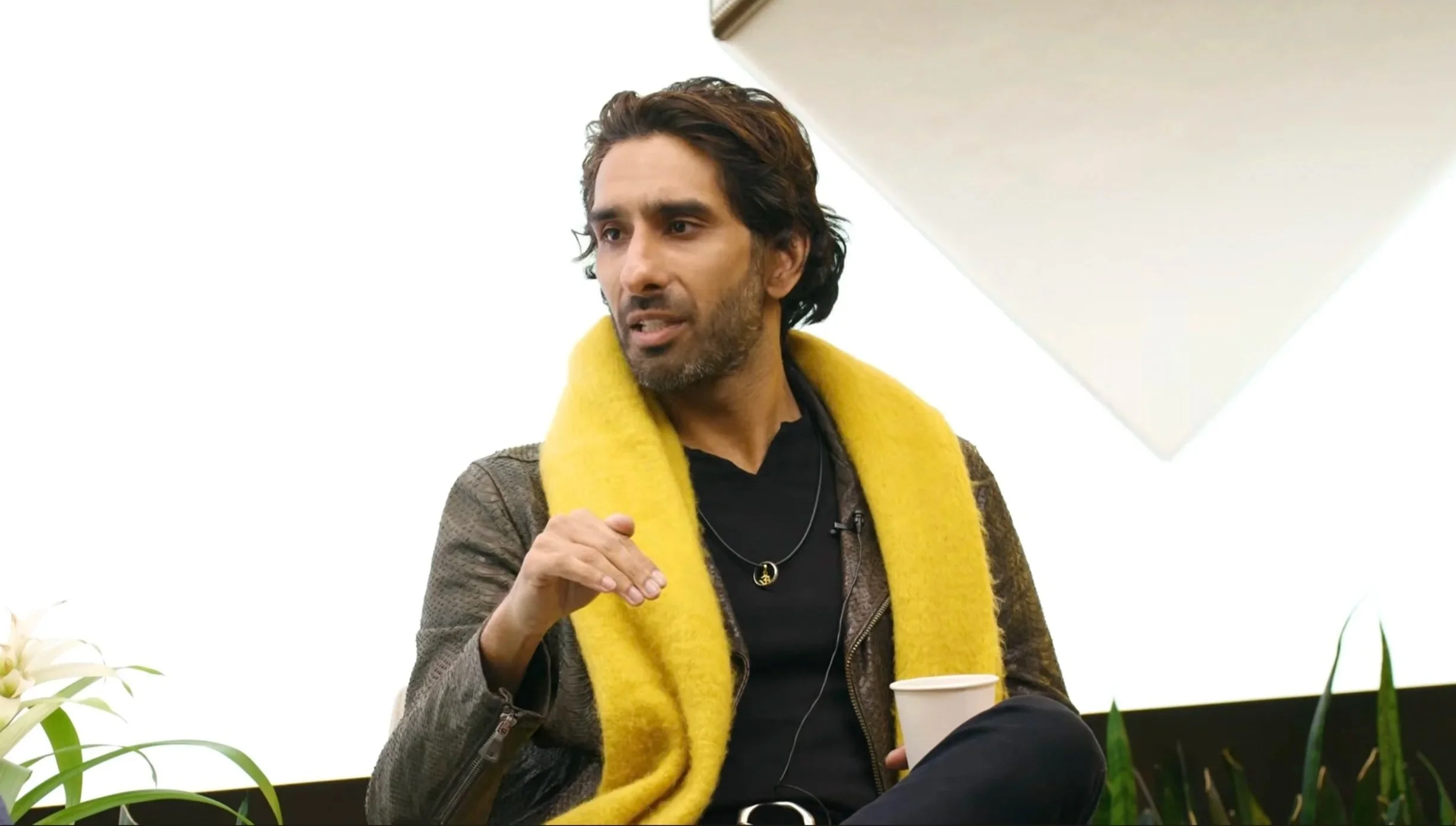
Credit : a16z
The 22% problem
In April 2017, Rahul Vohra, CEO and co-founder of Superhuman, a premium email client built for power users, had a problem he couldn't say out loud. The team was pushing hard to launch, convinced the product was ready, while Rahul believed they'd flop if they shipped it. His gut told him they didn't have product-market fit, and he had no irrefutable way to explain that to the people counting on him.
"That is not an inspiring thing to hear from your CEO," Rahul said. "Yeah, we don't have product-market fit. Keep working is not a good plan."
So he went looking for a framework that would make the diagnosis irrefutable. He found it in Sean Ellis's benchmark: ask users how they'd feel if they could no longer use the product, measure the share who answer "very disappointed," and treat 40% as the threshold separating companies with real traction from those still searching. Ellis had tested this across hundreds of venture-backed startups. The companies that grew almost always cleared 40%. The ones that didn't almost never did.
Rahul ran the question across his first users. The result was 22%, against a threshold of 40%. Most founders would have found that demoralizing. Rahul found it clarifying. "Finally, I can explain what I'm feeling to the team in a way that is irrefutable" he said. "You can't argue with these metrics." The question was what to do next.
You're allowed to change the market
Most founders treat the market as fixed and iterate on product alone. The market is a variable too, one that moves as freely as the product does and costs almost nothing to change.
Rahul's first move after seeing 22% was to go back through the survey responses and start segmenting. He was looking for a subset of users where the number was already higher.
He found that if he removed data science, sales, and engineering from his target persona and kept VC, CEO, founder, and BD, the number jumped to 32%. Ten percentage points. No engineering cycles spent.
That's what he calls "the right not to serve," and it operates as a genuine strategic choice. Deciding which customers to exclude is a product decision, just one most founders skip, defaulting instead to treating every potential user as worth pursuing. They treat the market as fixed and iterate only on what they're building, when the two variables are equally movable and one of them costs nothing to adjust.
The second question in his survey makes this possible: "Who do you think this product is best for?" It sounds like market research, but what it actually produces is positioning copy written by your happiest users in the words that matter most to them. When Rahul asked this of Superhuman's most enthusiastic early users, they described themselves. He was getting his messaging directly from the people who already loved the product.
The implication runs deeper than segmentation tactics. If you act on feedback from all your users equally, Rahul argues, you end up building what he calls "a confused muddy mess." The job is to figure out who to listen to, and that starts with deciding who the product is actually for. Narrowing the target is a signal of clarity, evidence that the founder knows precisely what they're building and who they're building it for.
The engine and the 50/50 rule
Getting from 32% to 40% required building, but the direction of that building was determined by the segment Rahul had already defined. He focused on "somewhat disappointed" users for whom the core benefit already resonated (speed, keyboard shortcuts, focus) and worked down their specific complaints. Alongside that, he applied a planning rule: half of every cycle building more of what users already love, half closing the complaints holding the somewhat-disappointed group back. Vision-driven teams tend to ignore the complaints, while data-driven teams tend to ignore the strengths, and neither approach gets to 40% on its own.
Why the number is supposed to fall
Superhuman's "very disappointed" score went from 22% to 32% through segmentation, then to 46% the following quarter, then 56%, then 58%. By any startup metric, that's a clean line up and to the right. The number will come down, and Rahul is explicit that this is the point.
The drop is what intentional expansion looks like.
When a company starts growing into adjacent personas (the salespeople Superhuman deliberately excluded at the start, the data scientists, the engineers), the 58% score gets diluted.
New users enter who are further from the core, and the "very disappointed" share shrinks relative to the whole. Andrew Chen calls this the law of shitty metrics: every metric degrades as you scale, because the conditions that made it strong were always specific to a smaller, more defined group.
What Rahul describes is a repeating cycle. You segment tightly to build the core. You earn a high PMF score within that segment. Then you deliberately expand into the next one and apply the same discipline all over again: figure out exactly who you're serving, what the main benefit is for them, and what's holding the somewhat-disappointed group back from crossing over. The score drops, then you push it back up. "That's the art of building great product," he said.
The founders who panic at the drop are the ones who misunderstood why the number was high in the first place. The score was high because of precision, because of a deliberate choice about who to serve, and that precision is the thing worth protecting as the score shifts.
Superhuman went from a $30-a-month email client sitting at 22% to one of the most talked-about productivity tools in Silicon Valley, and in July 2025, Grammarly acquired Superhuman for an estimated $825 million.