
The visual language of AI
How AI companies signal what kind of intelligence they are
Open the websites of a dozen AI startups and a pattern appears within seconds. Before reading the headline, the design already tells you what kind of intelligence the company believes it is building.
In a crowded AI market, visual language has become one of the fastest ways to signal positioning.
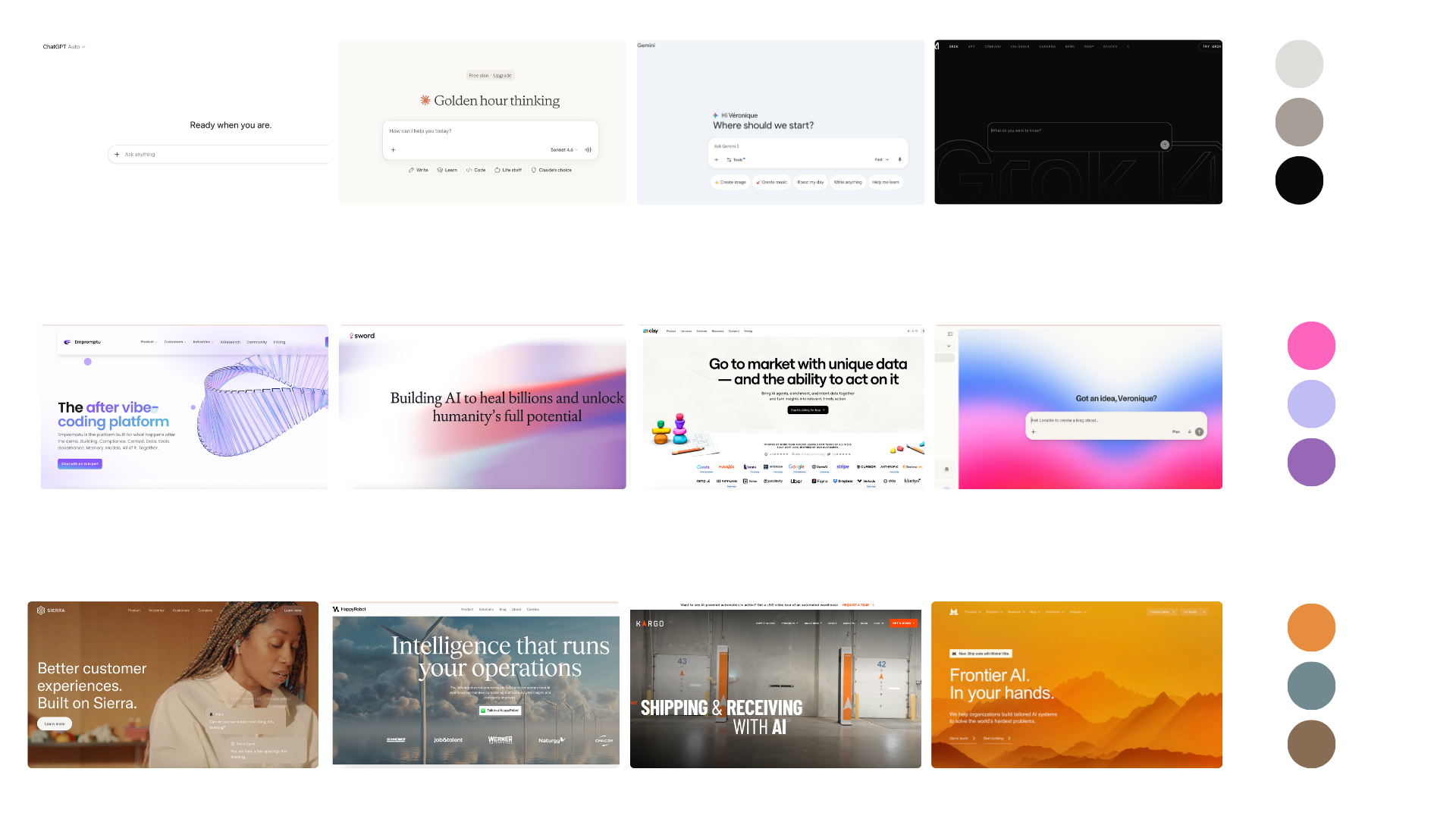
Some feel calm and minimal, almost like a blank notebook waiting for a thought, others look like engineering dashboards. Some resemble modern productivity tools, a few feel playful and expressive, and a growing number show warehouses, landscapes, or customer service teams.
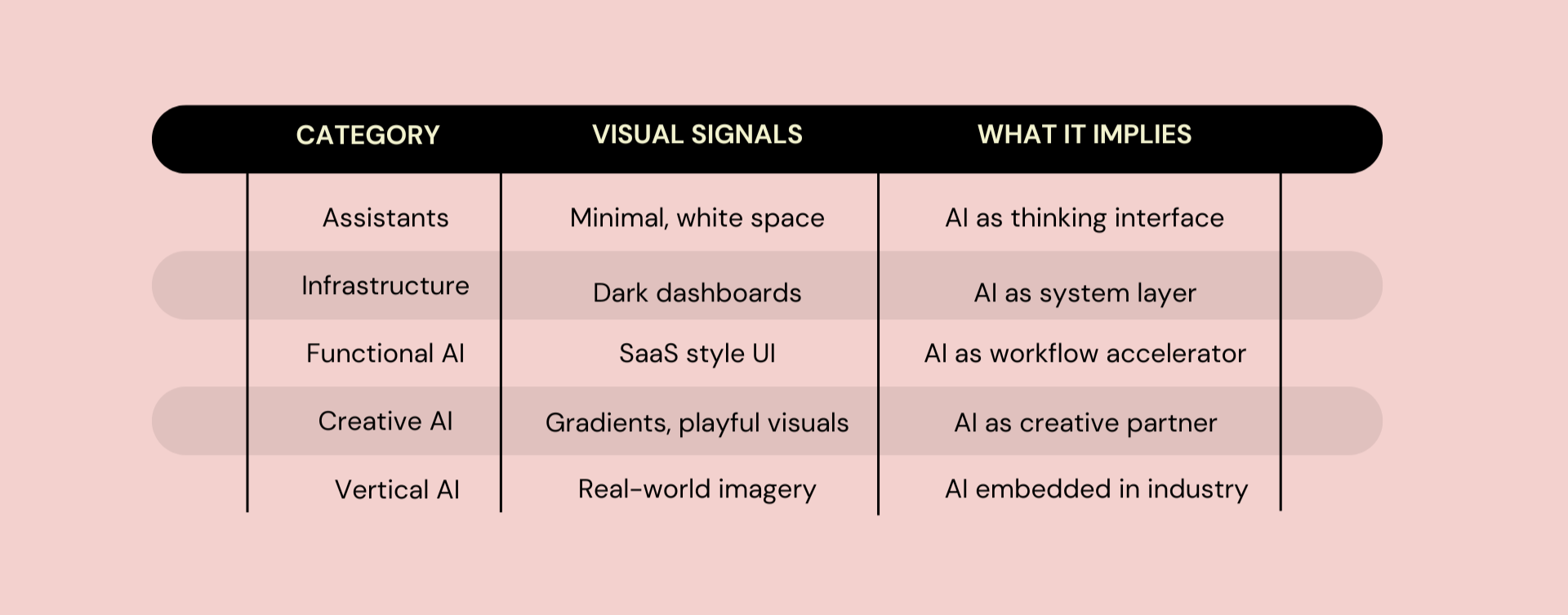
Across the AI ecosystem, five visual territories are emerging. Each one reflects a different theory of intelligence:
AI assistants
AI infrastructure
Functional AI
Creative AI
Vertical AI
AI Assistants
Palette: Neutral grayscale.
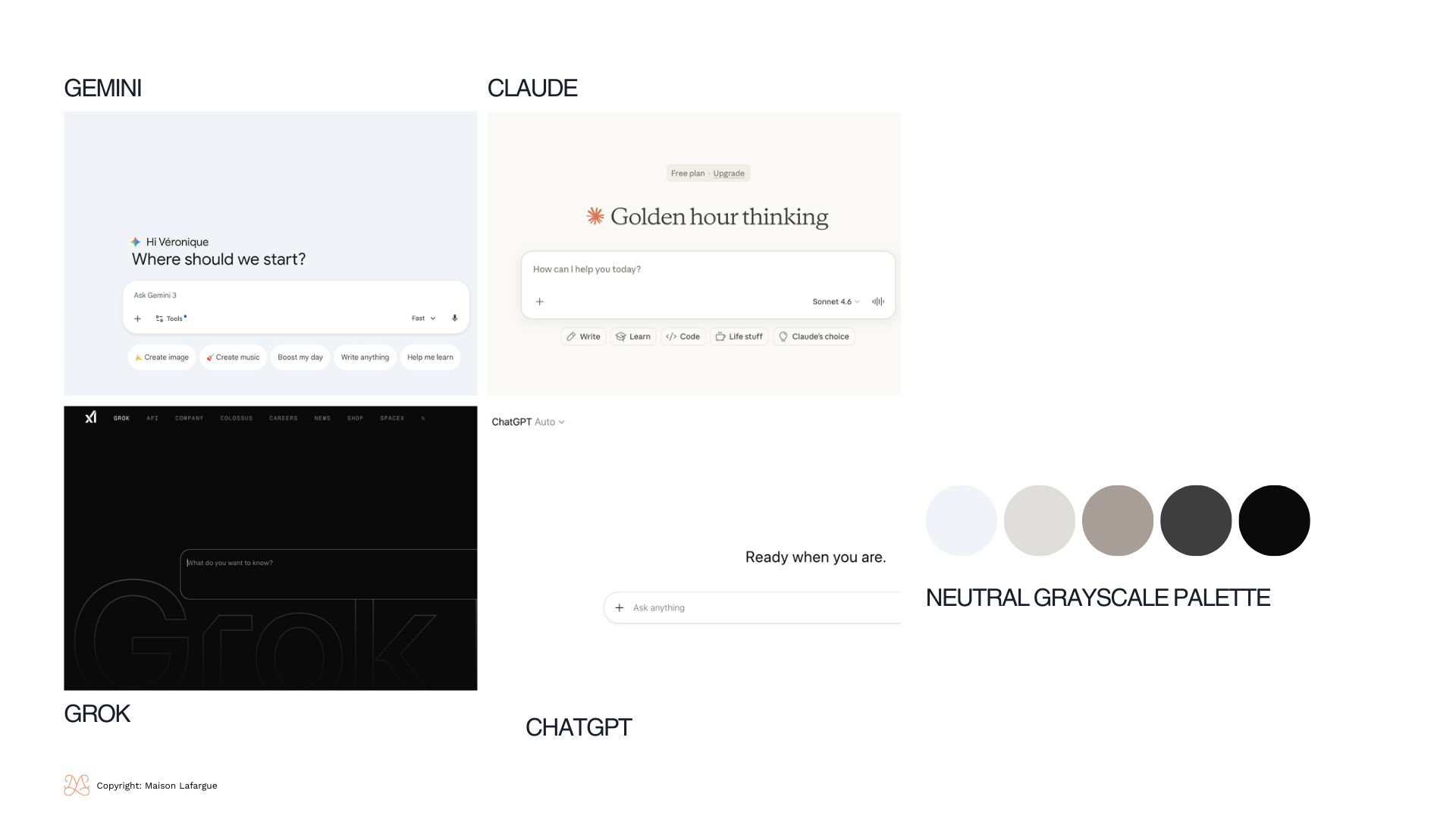
Credit: ChatGPT, Claude, Gemini, Grok
Assistants like ChatGPT, Claude, and Gemini rely on an aesthetic of restraint. White space dominates. Typography is neutral. The interface itsel, often just a prompt box, becomes the hero.
The design choice is deliberate: these products are positioning themselves not as flashy technology but as a new interface for thinking. The calmer the design, the more the intelligence feels reliable and universal. In this worldview, the AI disappears into the interface. Soft neutrals reduce distraction and create cognitive space for the interaction itself.
AI Infrastructure and agents
Palette: Dark and green accents.
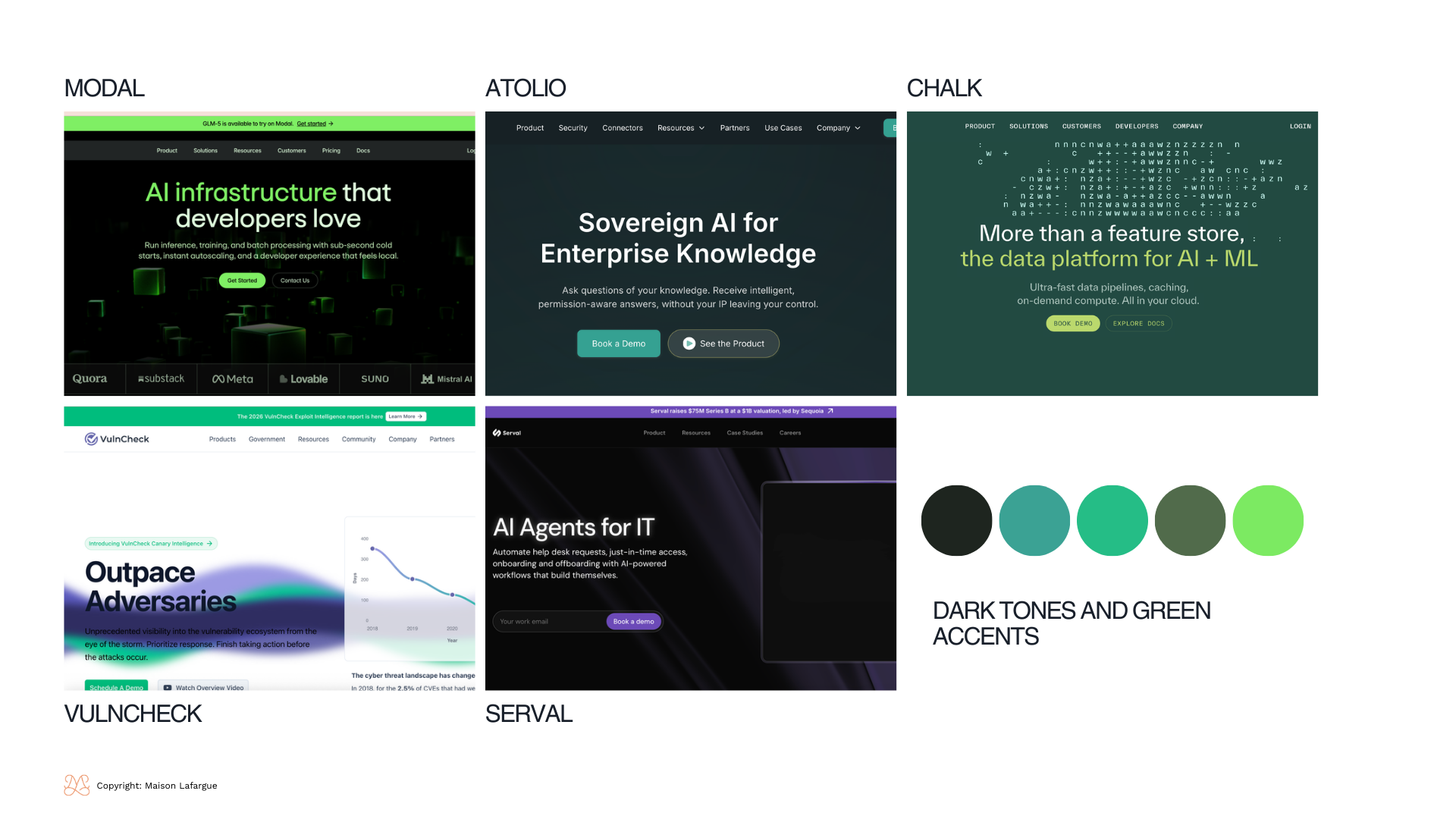
Credit: Modal, Atolio, Chalk, VulnCheck, Serval
Infrastructure and agentic platforms lean into a technical visual language. Dark interfaces, glowing accents, and system graphics evoke engineering environments rather than consumer software.
The design communicates capability and reliability. These companies are selling platform depth, compute power, and system orchestration, often to developers and technical teams.
Dark bases such as deep green, navy, or charcoal combined with high-contrast signal colors like neon green, teal, or violet. The contrast echoes system dashboards where highlights indicate activity and performance.
Functional AI
Palette: Warm, purple and pinks.

Credit: Mutiny, Gong, Relay, Empromptu, Lovable
These brands position AI as a work accelerator inside specific professional roles: sales teams, marketing teams, operations, or internal workflows.
The visual language borrows heavily from SaaS design: clear layouts, strong headlines, and product interfaces that emphasize usability and momentum.
The focus is not the technology itself but the workflow transformation it enables.
In this world, AI is a teammate that helps you get work done.
Creative AI
Palette: Whimsical, bright gradients.
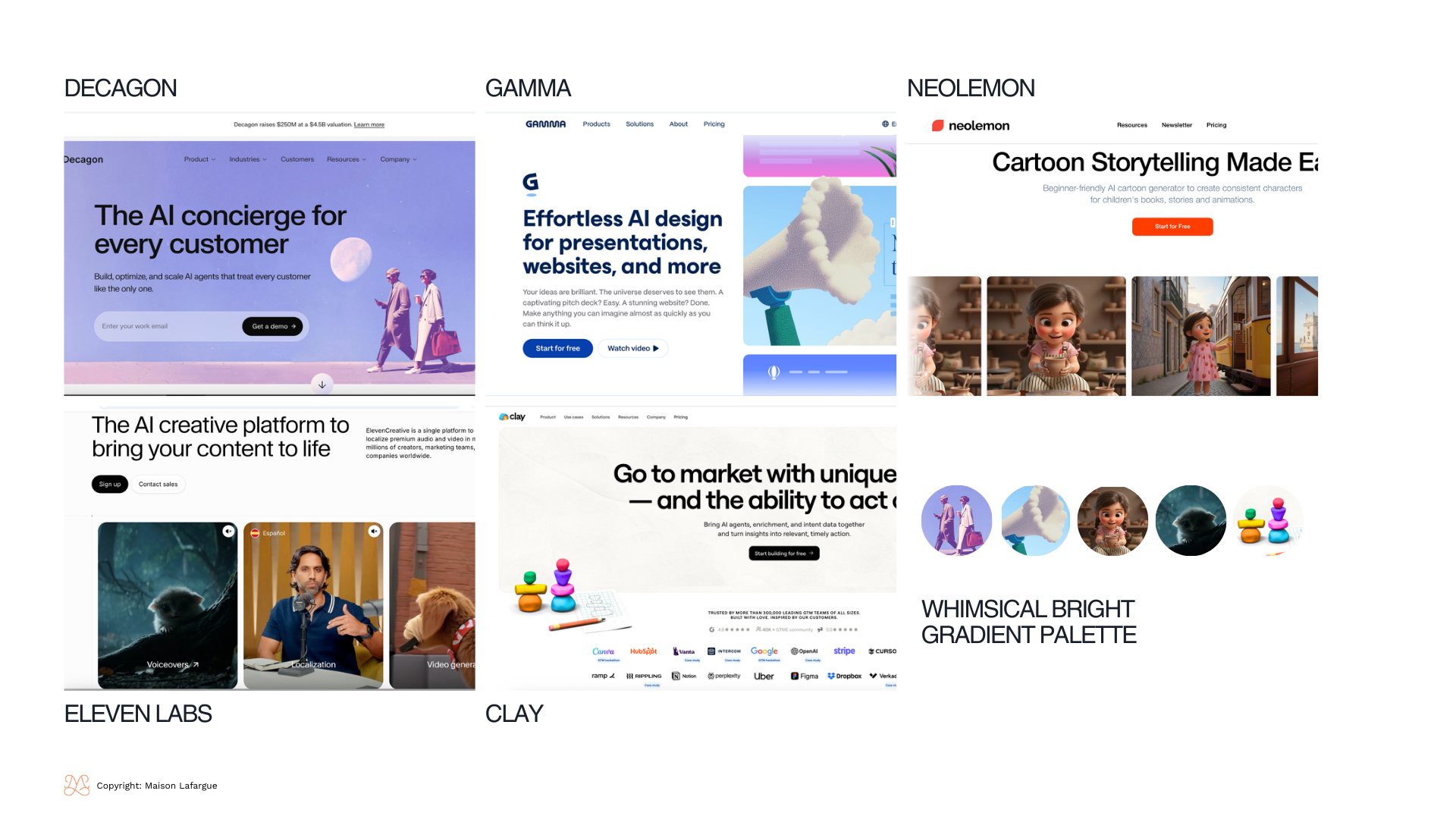
Credit: Decagon, Gamma, Neolemon, ElevenLabs, Clay
Creative AI tools embrace expressiveness and visual experimentation. Gradients, playful compositions, and imaginative imagery make the product feel creative before the user even tries it.
The design itself becomes proof of capability. If the product helps users create, the brand must look creative first.
In this world, AI is a collaborator for imagination. Playful gradients and vibrant hues that signal creativity and experimentation.
Vertical AI
Palette: Natural earth and rust tones.
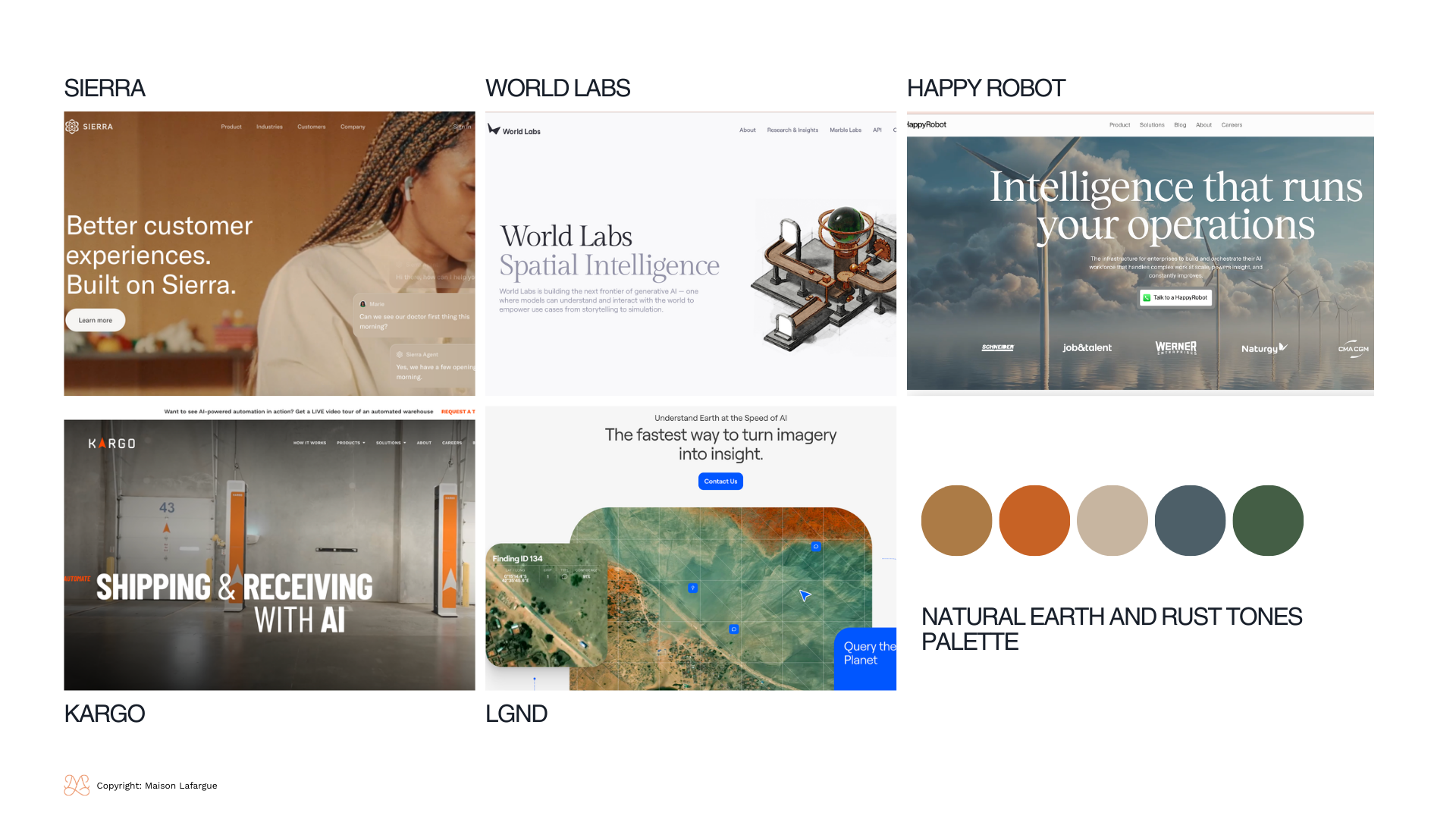
Credit: Sierra, World Labs, Happy Robot, Kargo, LGND
Vertical AI companies anchor their story in real-world environments. Instead of abstract tech visuals, their websites show warehouses, landscapes, infrastructure, and people doing the work.
The design choice is deliberate: these products solve specific industry problems. Showing the environment makes the value immediately clear.
In this world, AI is embedded in real systems and real industries.
Earth tones and industrial hues that reflect real-world environments and infrastructure.
Credit: Maison Lafargue
Across the category, visual identity becomes a way of expressing what kind of intelligence each company believes it is building.
In a market where many products rely on similar underlying models, visual identity becomes one of the fastest ways to communicate what kind of intelligence you are building and shape how humans think, feel, and respond.